
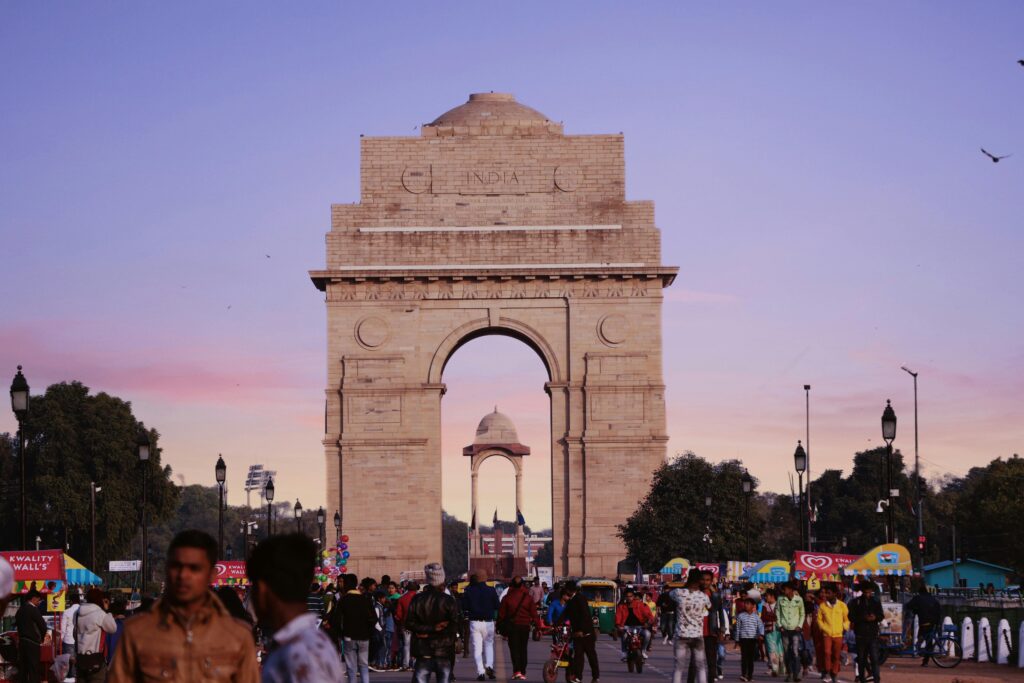
Before I went to Delhi, someone told me the city could be an “assault on the senses.” That was certainly true. It started with the heavy pollution, the crazy traffic, and the visible poverty that hits you the moment you step outside.
That first morning, I took my usual walk out of my hotel in South Delhi. Delhi is not great for walking, but I tried. After five minutes, I entered a dirt-poor street where people who looked like they had nothing were sitting on the pavement, staring into the distance. Then, on that very same street, I stood before the entrance to the Chanakya Mall. An ultra-luxury enclave for the rich to escape reality. Or so it felt. I admit I was happy to go in myself and have my hot chocolate in my own little world.

Ancient Tombs & Lodhi Garden
After that experience, I got my first taste of what I would love about Delhi the most. I entered Lodhi Garden.
At first, two locals approached me saying, “Country, country?” I quickly figured out they just wanted to know where I was from. When I said “The Netherlands,” they nodded in a friendly way and walked on. This would not be the last time people asked me this.
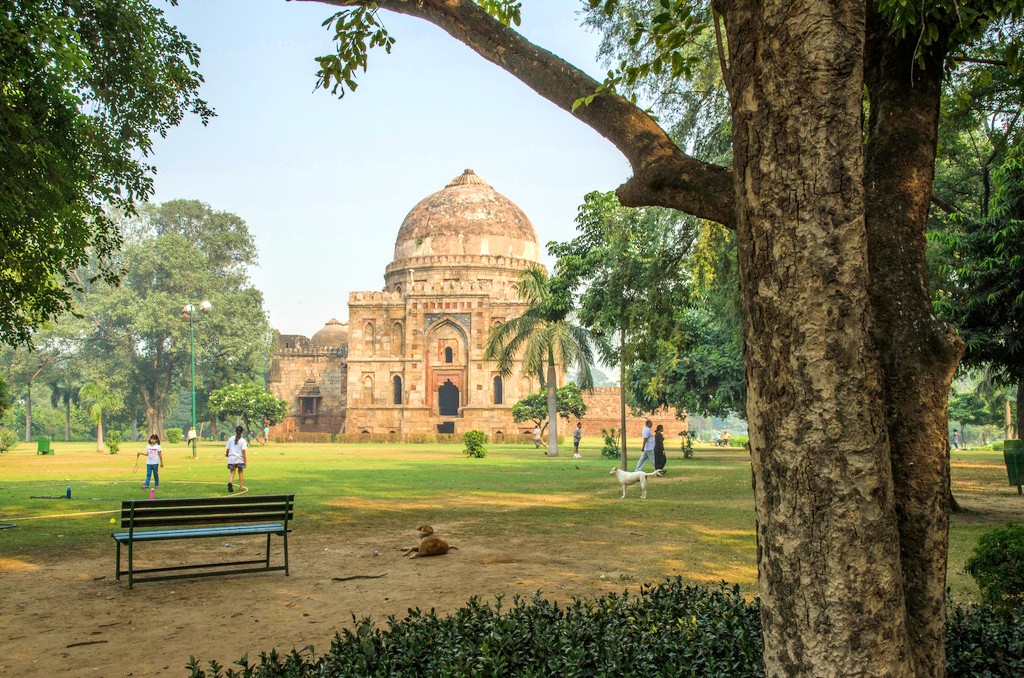
Lodhi Garden is a public park, but what makes it special are the ancient 15th-century tombs dating from the Delhi Sultanate. I was oblivious to this history before coming. I expected colonial buildings to be the main sight, but this ancient architecture became what I loved most during my five days here. In Lodhi Garden, these structures aren’t fenced off museum pieces. They are part of society. People interact with them naturally. It felt like we were just discovering them together. It reminded me of Siem Reap in Cambodia. Ancient, accessible, and alive.
Humayun’s Tomb, Ignoring Google
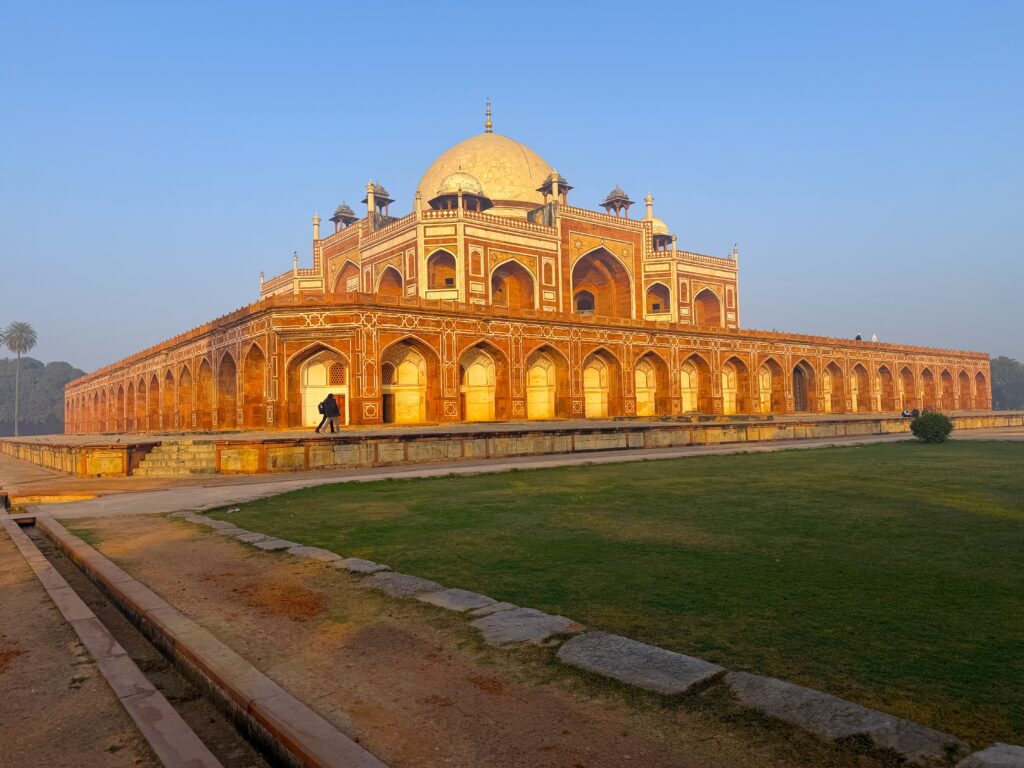
On the second day, I ignored Google’s opening times (a good decision) and arrived at Humayun’s Tomb around 7:30 AM. Built in 1558 for the Mughal Emperor Humayun, it served as inspiration for the Taj Mahal. The most striking thing was that I was completely alone. Being alone with the tomb in its original state, I felt like an archaeologist discovering it for the first time.
Qutub Minar and Cows
Delhi (and much of India) has an unusual traffic participant: the cow. Seeing them calmly occupying the street and often stopping traffic altogether can be surprising at first. On one occasion, it even delayed my arrival at my next destination. Yet there is also something quietly beautiful about it: a deep respect for animals.
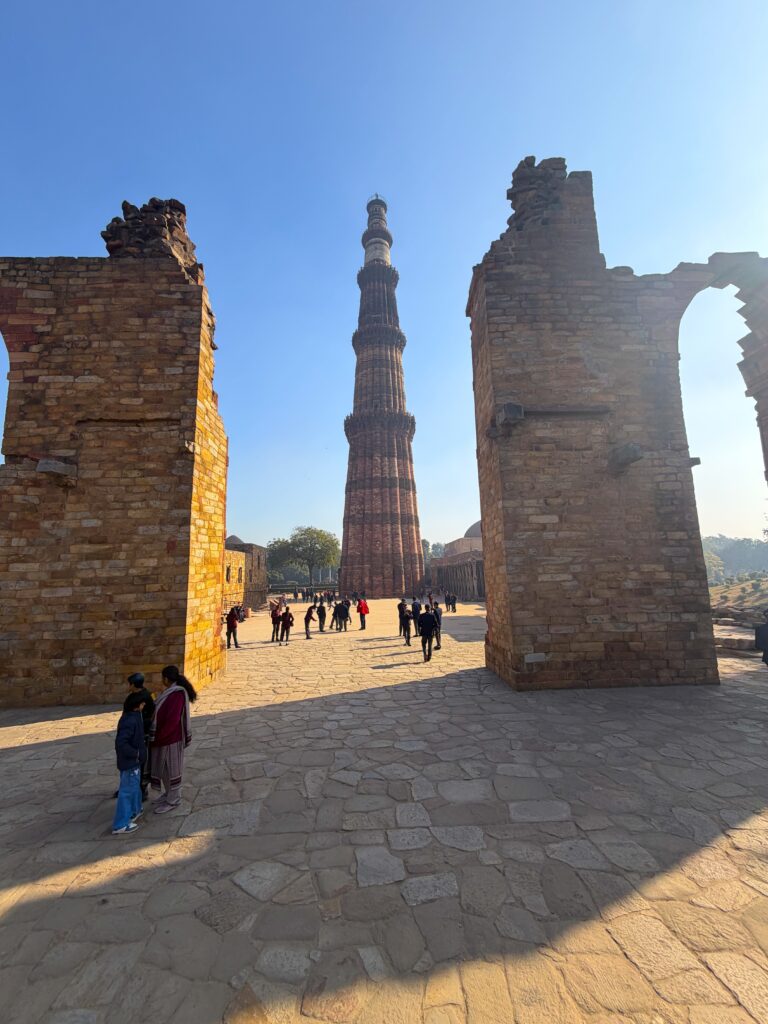
A bit later than planned but Qutub Minar became my favourite sight in Delhi. A UNESCO World Heritage site with a 72.5-meter victory tower, it feels almost like a painting when you see it. Perhaps the haze of pollution adds to that unreal effect. It was part of a heritage park that could rival Rome’s ancient forums. Who knew Delhi had these kinds of places?
Rajon Ki Baoli
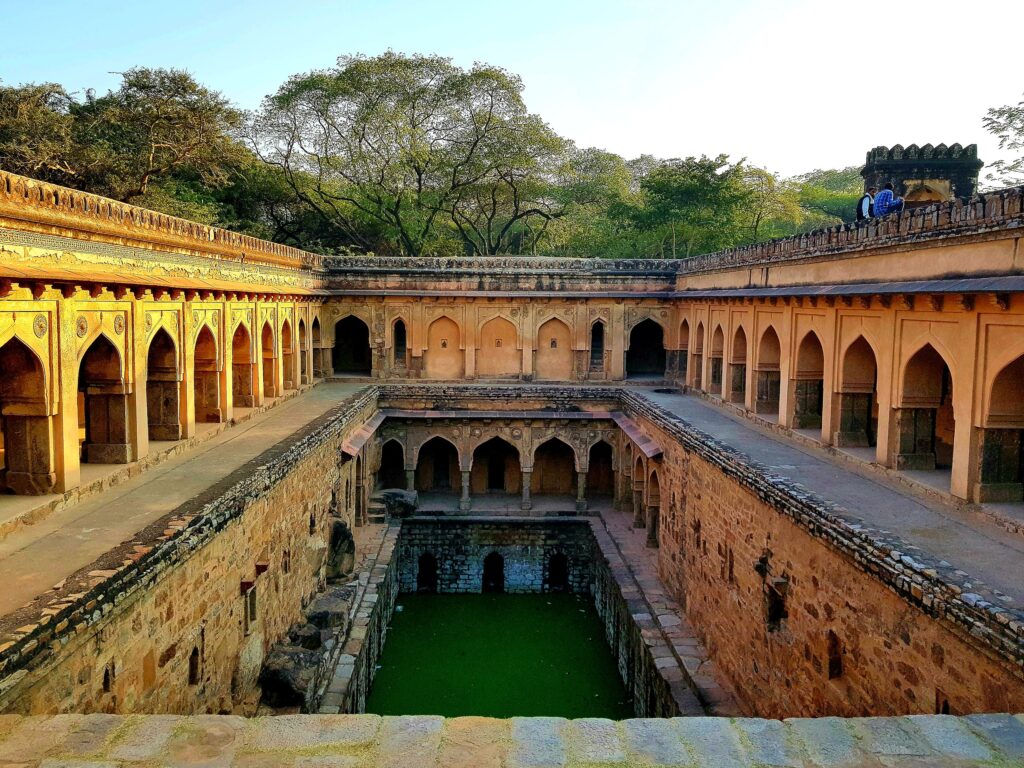
After that I reached Rajon Ki Baoli, a closeby stepwell built in 1506, standing in its original state. It felt unreal to roam around freely without strict rules. It was a perfect ending to the day.
Delhi Neighbourhoods & The Colonial Reality
On my last day, I wanted to glimpse the neighbourhoods where people actually live. I walked through affluent areas like Vasant Vihar which had lush trees, yet even there, the atmosphere remained chaotic and dusty, weighed down by the heavy pollution. Old Delhi (many people warned me to go here) I only visited one time in the morning. I went to the Red Fort and Jama Masjid. Interesting but for me they did not stand out like the others.
I looked for the colonial side of the city, but it was hard to enjoy. Connaught Place felt like a neglected open-air mall, and the grand Lutyens villas and parliament buildings were mostly gated and invisible. The roads were often broken or blocked. If not for those things Delhi could be prettier I thought. I ended the day escaping the reality outside with afternoon tea at The Imperial, a posh relic of the British era.

People & The Poverty Dilemma
The people were friendly, and with 50% of the population being vegetarian, I connected easily with the food culture. I never felt unsafe, though being the only foreigner in a mass of people takes getting used to.
However, what stayed with me most was the intense poverty. It forces a constant dilemma upon you: whom do you give to, and how much? In the end, I decided to give to anyone who asked and anyone I passed who looked like they needed it. It felt like a drop in the ocean, but it was the only choice I could make. It was a confronting experience.
Overall, I had a good and eye-opening time in Delhi. It is chaotic, fascinating, and very human. It gave me headaches, literally and figuratively, but a visit is absolutely worth it.
My next stop is Agra & Jaipur.
My Delhi Pocket Guide & Tips
For those who want the quick “knows” before they go.
- The Vibe: A massive contrast of ancient peace and chaotic reality. It is an assault on the senses, both good and bad.
- The Charm Spots (My Favorites):
- Lodhi Garden: Best for a gentle introduction to the city’s history.
- Qutub Minar: My absolute favorite. Feels like walking into a painting.
- Rajon Ki Baoli: A stunning stepwell in Mehrauli Archaeological Park. Quiet and atmospheric.
- Humayun’s Tomb: Go at 7:30 AM to have it to yourself.
- The Reality Check:
- Walking: Not recommended for long distances. The pollution can cause headaches and nausea, and infrastructure (pavements) is often broken or non-existent.
- Giving Money: You will be asked often. Locals may advise against it, but follow your own intuition.
- Food Note: It is a vegetarian paradise. Roughly half the population is vegetarian, so you never have to hunt hard for food.