I’m a strong believer in first-time travel writing. When everything is new, you’re more mindful. You notice details, talk to random people, feel excitement, seek adventure. It’s easier to take the reader along in a story this way. Yet many people ask me for tips on Shanghai, the city I live in. So here goes.
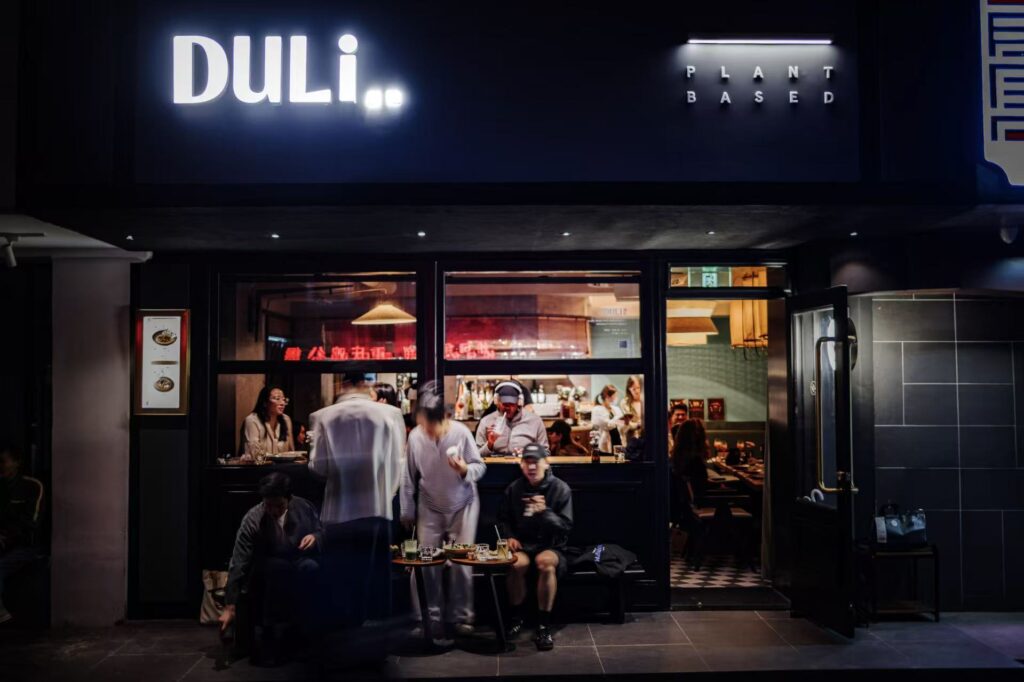
Duli Restaurant, Jing’an, Yanping Road
I’m inside Duli, my plant-based restaurant on Yanping Road. I’m here for new dish tasting, the fun part about owning a restaurant. Yanping Road sits in Jing’an district, the young, lively area where many expats live these days. Cafés, restaurants, coworking spaces. A good vibe.
The restaurant manager and I talk about declining restaurant traffic we’ve seen lately.
“Is it the economy?” I ask.
“Or is it because we’re not on Donghu Road anymore?”
“Probably fifty–fifty,” she says.
Donghu Road is where Duli started. It’s unique because it’s right in the city center, yet part of the old French Concession. That’s where I head next.
The French Concession: Let it be the French
The French Concession still works on me. Colonial apartments, villas, leafy streets, a slower rhythm. It stretches far across the city, but areas like Anfu Road and Wukang Road have become the most popular parts. Wide sidewalks, old trees planted long ago by the French, cafés, bars, boutique shops, villas hidden behind gates.
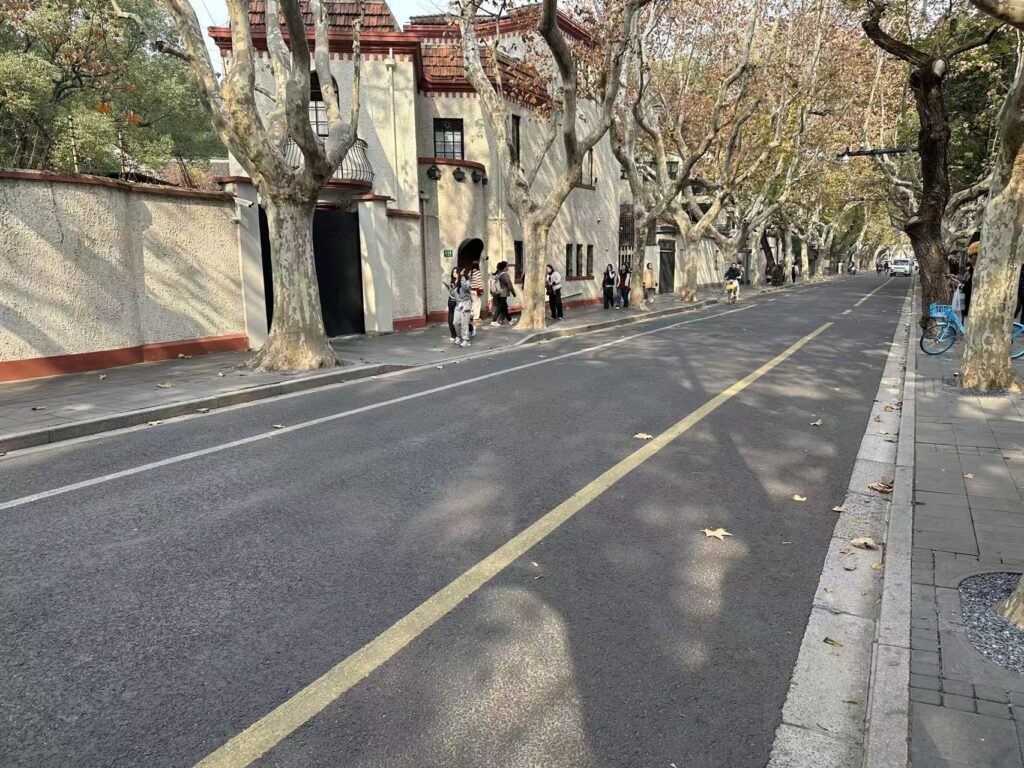
Shanghai’s colonial past gives the city much of its identity. And I often think, if a city has to be colonised, let it be the French. They had taste.
I try to enter a villa compound. I manage to walk in, but almost immediately a Chinese man waves his hand. No, no, no. Most of these villas are now owned by very wealthy Chinese families. Times have changed.
Besides the French, the British were here too. And they left Shanghai what might be its most iconic place: the Bund. To go there, I take my favourite walk in Shanghai, alongside the Suzhou Creek.
Suzhou Creek & The Bund
I walk along Suzhou Creek, the river that cuts through the heart of Shanghai. It passes Jing’an, where I live, and slowly pulls me toward the Bund. This is my favourite walk in the city. It calms me down. The noise fades a little, the pace slows. I pass old buildings, quiet stretches of water, cafés and restaurants that feel slightly removed from the rush.
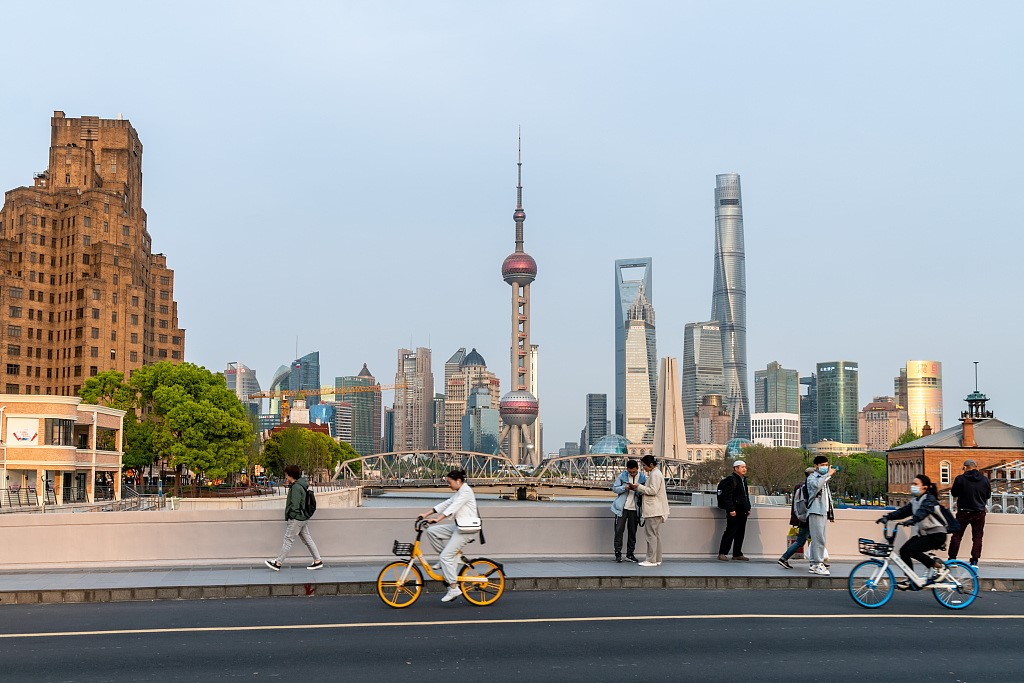
I stop for a drink at the popular Fotografiska, then continue toward Zhapu Road Bridge. It’s one of my favourite spots in Shanghai. From here, the city opens up. This is where the walk turns into the Bund.
The Bund
The Bund is a long row of colonial banks, consulates and hotels built by the British early 20th century. Locals, expats and tourists all gather here. On one side, historic buildings. On the other, across the Huangpu River, Shanghai’s modern skyline. That contrast is what makes it so iconic.
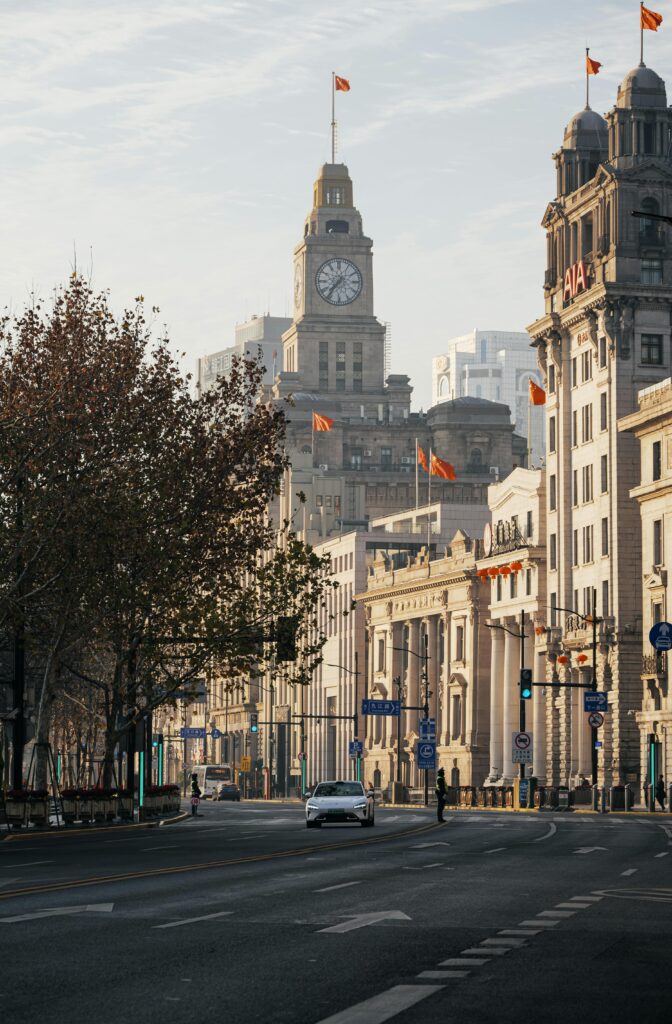
I walk into Bund 18, where the famous Bar Rouge used to be, still my favourite spot for skyline views. It has changed owners and is now called Kev Bar. The view is still excellent. Standing here, I think back to the first time I visited, almost twenty years ago. The Bund still has that wow factor.
Lujiazui: Endless rows of buildings
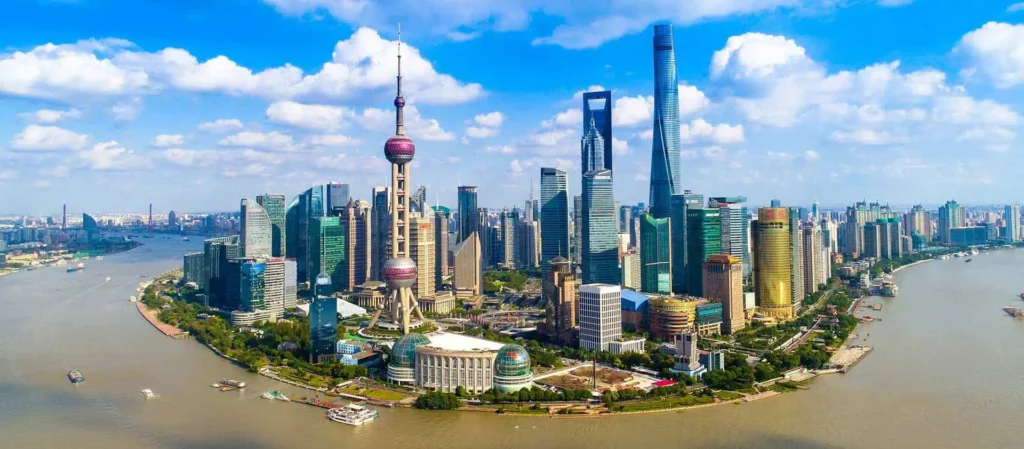
I take the boat across the river to the modern Lujiazui. I go up the 629 meter high Shanghai Tower and I start chatting with a Dutch traveller. Clearly a first-timer.
“There is no end to the rows of buildings,” he says.
“This city is so big.”
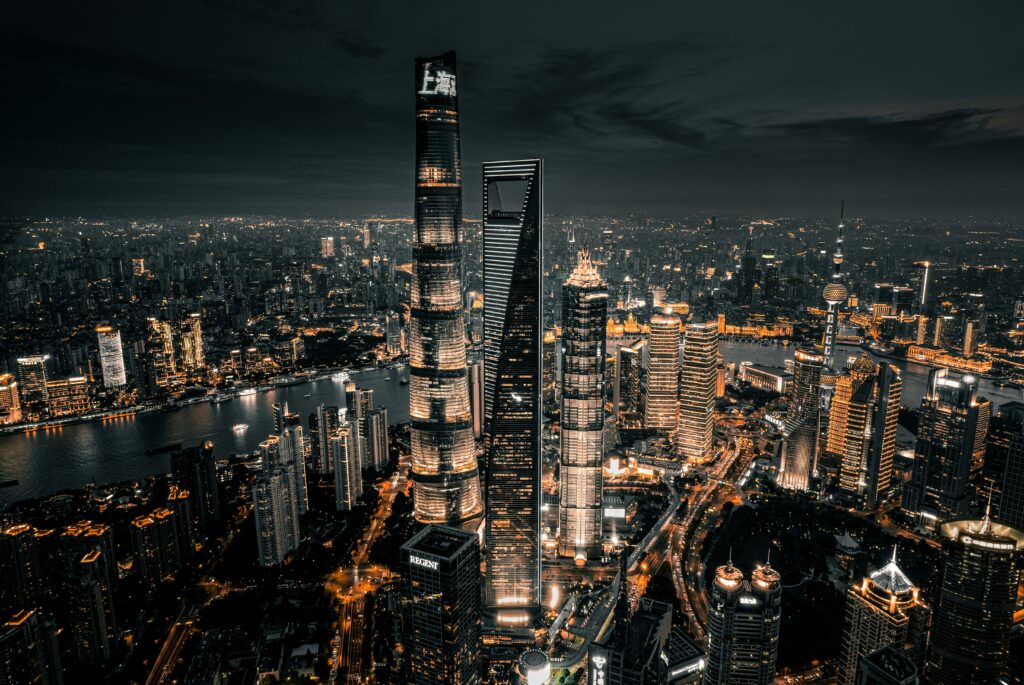
I nod. By some counts, Shanghai is the biggest city in the world. If you want to understand its scale, Lujiazui is the place. Go up one of the tall towers and look out. It’s overwhelming, even after all these years.
The South Bund & Power Station of Art
On my last day, I head somewhere less familiar to me: the South Bund. This area along the Huangpu River feels more spacious, calmer, something I often miss living where I live.
I visit the Power Station of Art, a former power plant turned museum. The exhibition itself is a bit too artsy for me, but one slogan somehow sticks in my head: “Does the flower hear the bee?”
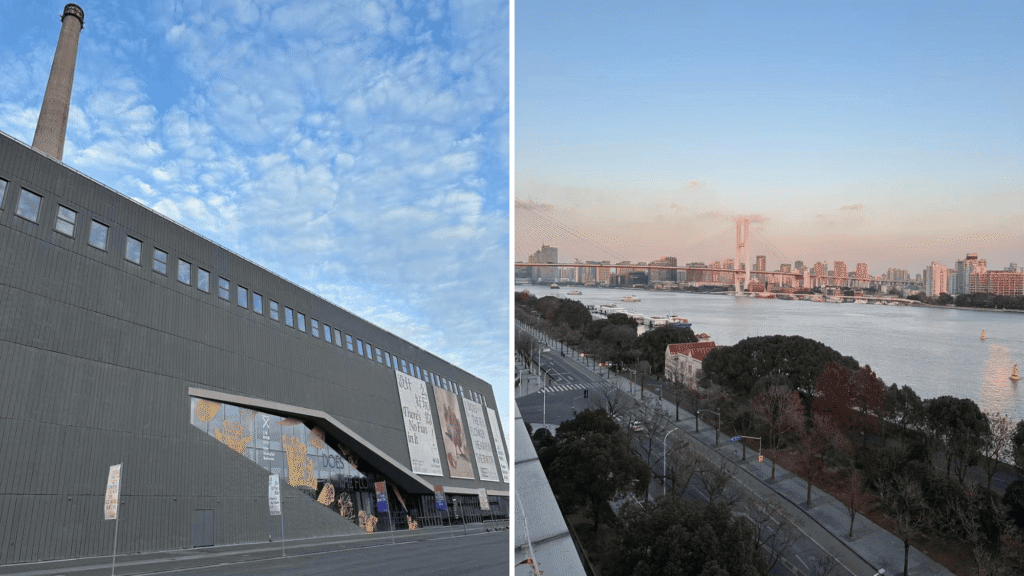
I end the day on the rooftop, watching cargo ships pass quietly along the river. I post a photo on Instagram. An Austrian friend comments, “Shanghai is still the best city in Asia.”
If you’d asked me fifteen years ago, I’d agree. But I’ve been here too long now, so I don’t comment.
Reflection
Writing about Shanghai has been a challenge. I feel I’ve crossed the point where staying in one place inevitably dulls the magic. At the same time, writing this made me rediscover familiar areas and notice new ones. So it’s good to be a tourist in your own city now and then. Maybe the real passion belongs to first-time visitors now. I’m okay leaving it with them. I have other cities to visit!
Next stop: New Delhi.
My Shanghai Tips
• Stay in Xuhui, preferably in or near the former French Concession
• Wander around Yanping Road and Wuding Road in Jing’an
• Walk along Suzhou Creek to Zhapu Road Bridge, my favourite spot. Best in the late afternoon
• Spend time on the Bund and, if possible, go up to Kev Bar for the iconic bund – Lujiazui view and feeling.
• Visit the Peace Hotel for a sense of history
• Wander around Lujiazui and go up one of the 3 tall towers if you want to feel the city’s scale
• The French Concession is essential: Wukang Road, Anfu Road, Donghu Road, Maoming Road
• If you have time, see People’s Park, Xintiandi and Fuxing Park – Walk on Nanjing Road from Kerry center , via Taikoohui to People’s park
• Go to the South Bund and the Power Station of Art for peace and art, and further downriver to Gate M if you like newer creative areas