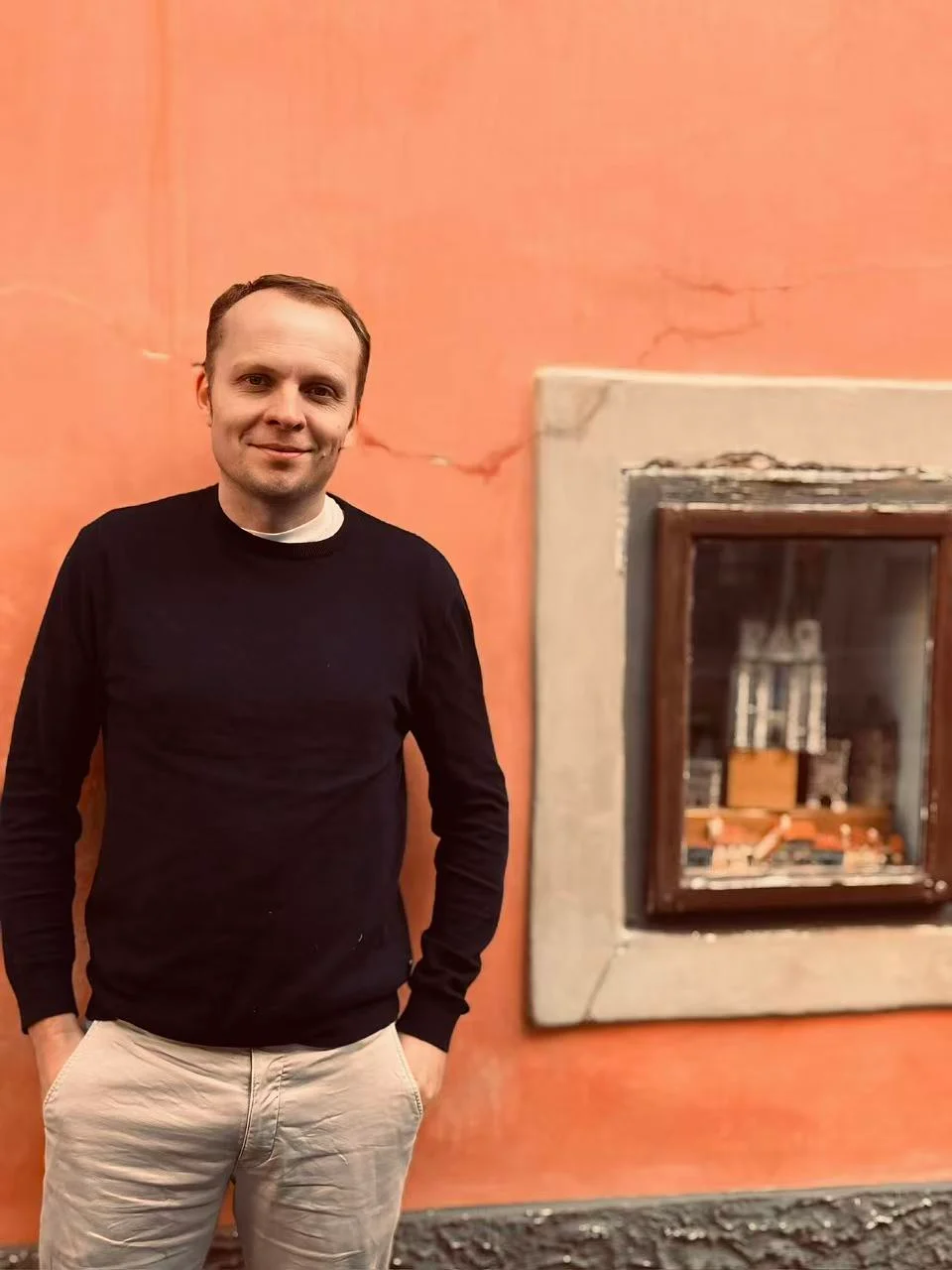
My name is Thijs. I’m Dutch and have lived between the Netherlands and China, where I own a plant-based restaurant in Shanghai called Duli.


I love traveling, and I started this blog to share what’s actually useful, not endless lists or the “everything is perfect” version of travel. Just the beauty, the charm, and the honest reality of places as I experience them.

Kuala Lumpur: A week without my passport

There is a first time for everything. Losing my passport is one of those. I never thought it would happen to me and when I travel I always compulsively check if it is still there. But that Monday afternoon, March 2nd, when I arrived at the Mandarin Oriental near KLCC, I could not find it. Did I leave it at the airport? Or did it fall out while rushing out of the taxi in heavy rain because the traffic was not moving? I still don’t know.
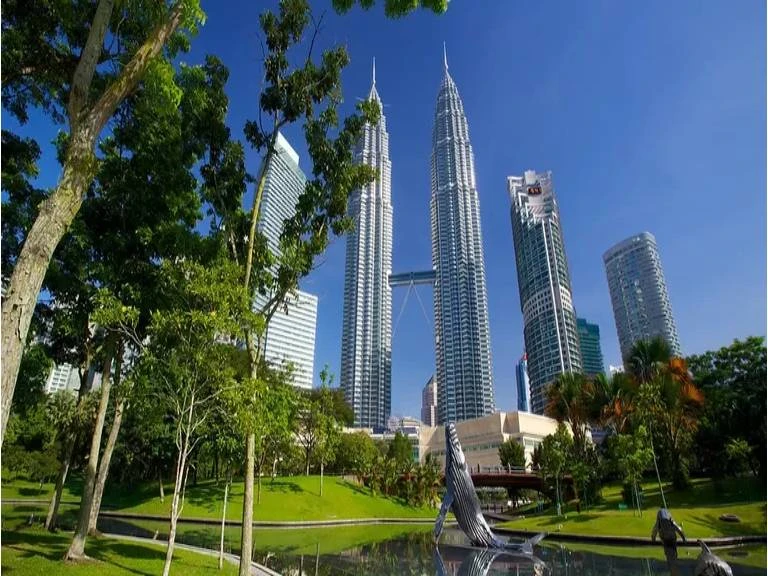
KLCC Park

What I do know is that it gave me something unexpected: a full week in Kuala Lumpur.

The next morning, March 3, morning I was at the Dang Wangi police station for a mandatory missing passport report. After being sent to several floors I ended up waiting a long time in a room full of other people. And the occasional inmate, shackled, looking confused and passing by.

A German couple who had exactly the same ordeal were sitting next to me. After almost two hours of waiting I suddenly learned the report required a cash payment of two Malaysian ringgit, about fifty euro cents. Unfortunately I had no cash. Paying meant going to an ATM and repeating everything again. The waiting, the floors, the paperwork. After hearing from the German couple that I was “the nicest Dutchman they had met”, I took the gamble and asked if they could lend me two ringgit, adding that I had never begged anyone for money in my life. They laughed and happily gave it to me. I was saved.

Dutch Embassy Kuala Lumpur
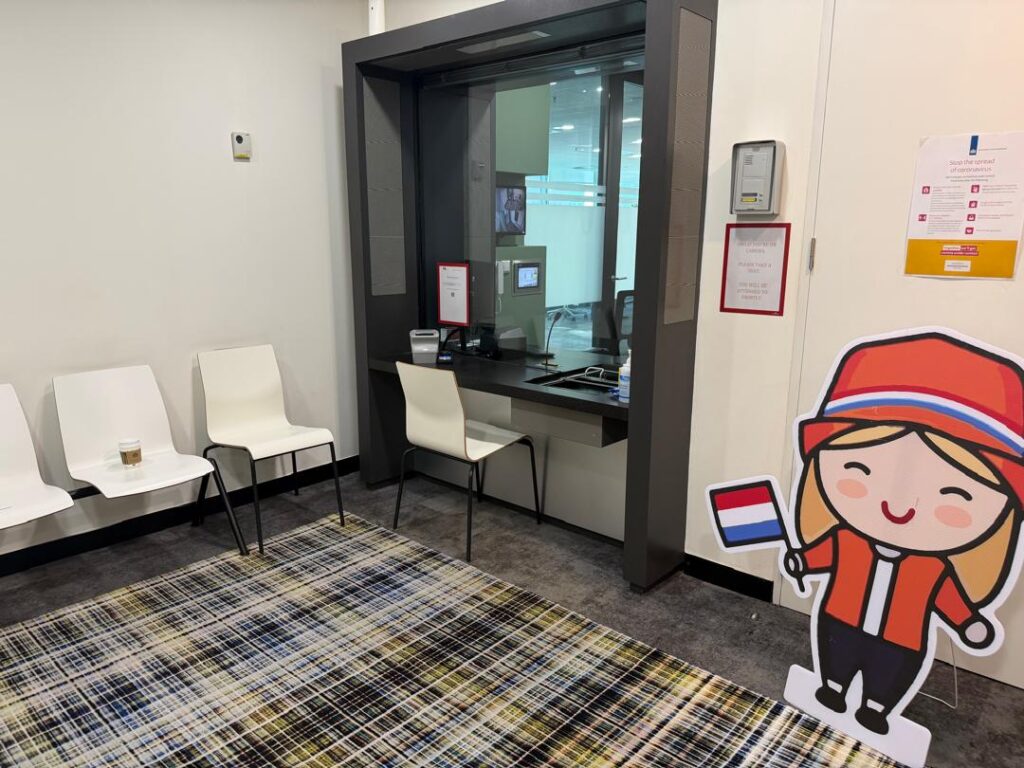
The surprising Dutch Embassy in KL

The Dutch Embassy was another surprise. In many cities Dutch embassies are large villas or impressive buildings like in Tokyo, Bangkok or Beijing. In Kuala Lumpur it turned out to be basically a small studio apartment with one non-Dutch person working there. The Dutch taxpayer can be happy, I thought. For my new passport I had to wait (only) five working days, so it was time to explore the city.

KLCC Park

The embassy happened to be located right next to KLCC Park, the same park where my hotel was. The park sits between the Petronas Towers, several skyscrapers and the Suria KLCC mall, yet somehow feels green and relaxed. It had that nice feeling of being connected and dynamic, yet also peaceful. Over the week I kept coming back here.
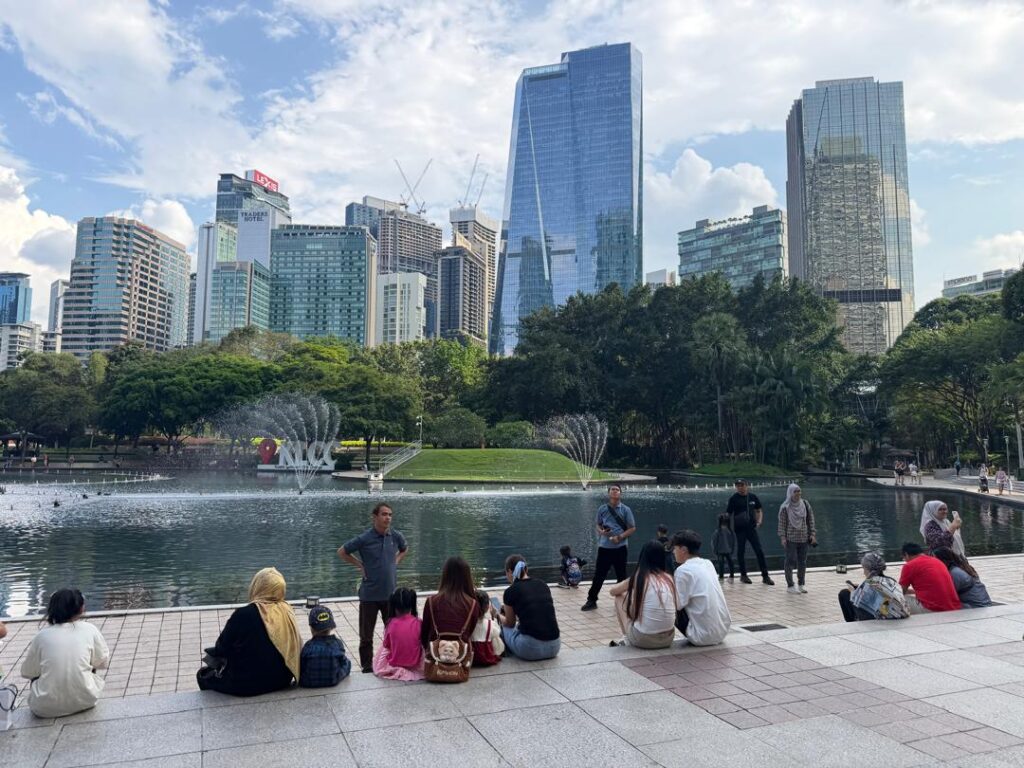
KLCC Park

At the park I started to notice the crowds in Kuala Lumpur. Malaysia is interesting in that it is not always clear who is local and who is not. The population is made up of Malays, Malaysian Chinese and Indians, and you see that mix everywhere, giving the city a less uniform character. At times a bit confusing, but also diverse and interesting. A taxi driver told me they all get along well, and from what I saw that seemed to be true. Most people were friendly.

Chinatown

Now it was time for the hop-on hop-off bus. I had to go early, as the traffic in KL felt more intense than 12 years ago when I was last here. Ramadan didn’t help. I guess being hungry makes everyone leave earlier, as the jams already started around 4 pm.

Chinatown is usually not my favorite. Many of them feel loud and touristy. But the one in Kuala Lumpur surprised me. Discovering it was actually a coincidence. The main Petaling Street area felt slightly disappointing at first and when I reached the bus stop I missed the bus by about five seconds. So I had some time to explore more. That turned out to be a good thing because I discovered smaller streets with cafés, interesting lighting and a much nicer atmosphere. Sometimes missing something leads you to something better. From Chinatown it is also easy to walk toward Merdeka Square where Malaysia declared independence, surrounded by old British colonial buildings.
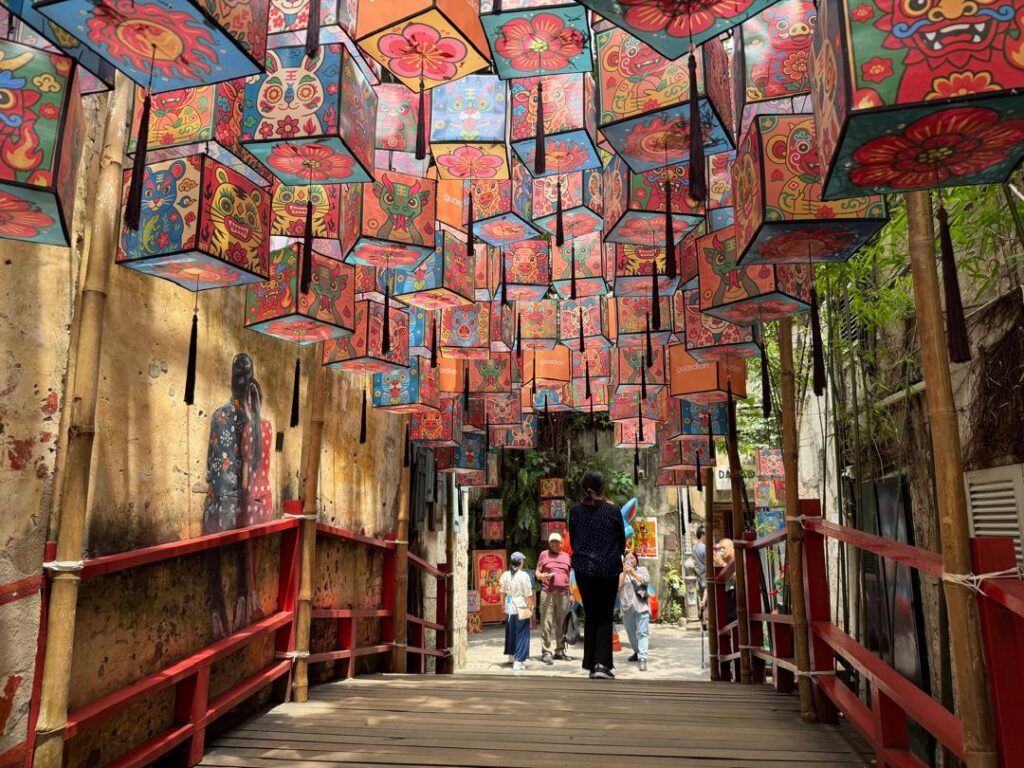
Chinatown Kuala Lumpur

Over the following days I wandered through many other parts of the city as well, from the busy Bukit Bintang and Jalan Alor area to the botanical gardens and bird park, where birds fly freely around you in a mix of beauty and slight stress. I also stopped at the rather over-commercial Thean Hou temple, which was not worth it, and spent time in several of Kuala Lumpur’s large shopping malls, with the new TRX Exchange standing out the most.

Visiting Malacca

Then a nice moment came when an Italian tourist I met at a vegan café tipped me to go to Malacca, a historically famous trading city with strong Dutch roots. So I went.
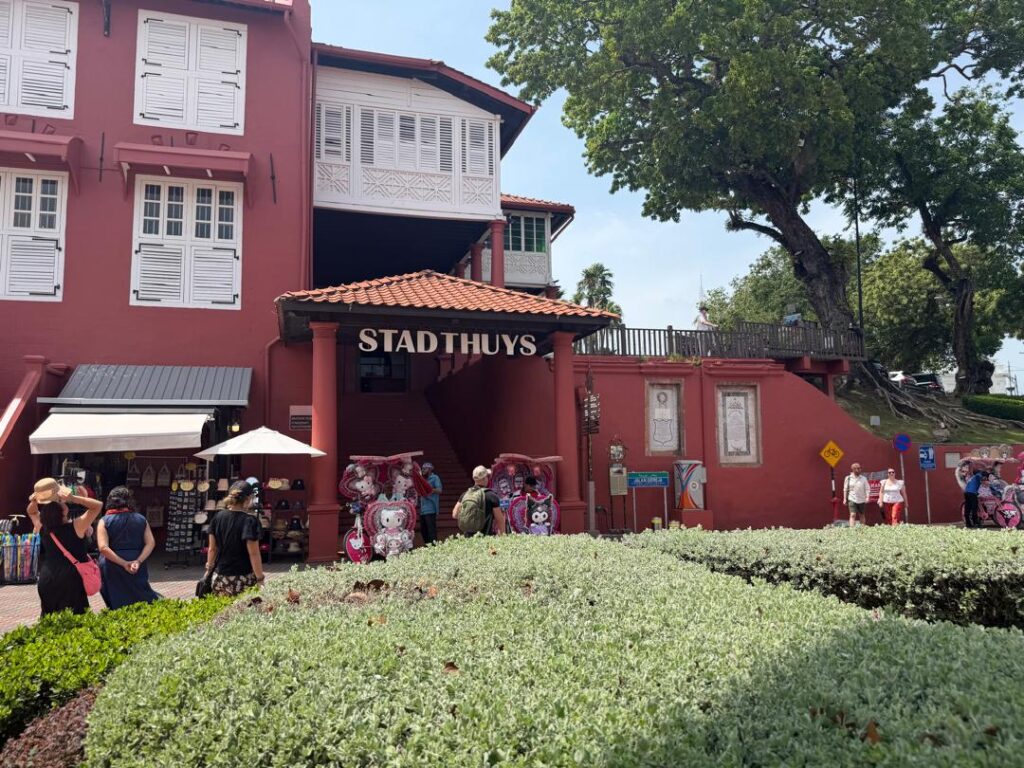
1650 Dutch built Cityhall Malacca

Standing on the hill in Malacca where Dutch officers were buried in the old church, I was reading stone texts written in old Dutch. I could recognize words but still needed the English translation to fully understand them. Having a beer with a Dutch person from the 1600s would probably not have gone very well, I thought.

The red colonial buildings, painted later by the British, were interesting, but the real highlight for me was the Chinatown across the street. Much of that area had originally been built by the Dutch after reclaiming land from the sea. Chinese traders later settled there and the neighborhood slowly became Chinatown, which means it is basically a Dutch-built Chinatown.

It felt charming and delicate. The Baba Nyonya Heritage Museum, showcasing the history of the local Peranakan Chinese-Malay community, was a highlight.
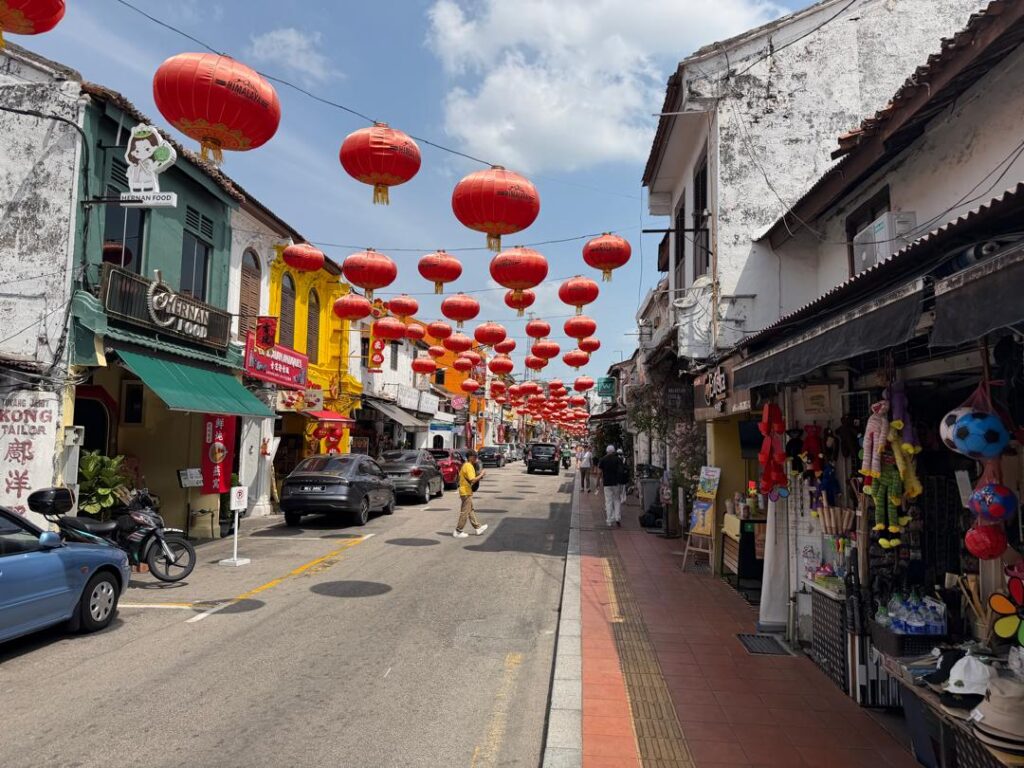
Dutch builkt Chinatown Malacca

On my last day I returned to the small studio apartment that is the Dutch Embassy. This time when I walked out I was a man with a passport again. And after seven days it felt like a good time for a new place, Penang Island. More on that in the next blog post.

Reflection

For me Kuala Lumpur is a nice city. Not as chaotic as Bangkok or Jakarta, but not as organized as Singapore or Shanghai either. It sits somewhere in between. The people are friendly, English is easy, it is relatively cheap (not unimportant), and the traffic is manageable if you avoid Ramadan afternoons. It might miss a bit of character at times, but it makes up for it in convenience. Not a bad place to lose your passport.

Some extra tips

-For really nice and fine vegan food. Visit Kuki Vegan in KL. Vegan restaurants are often not that tasty but this one delivers.

-If you want to escape Kuala Lumpur central visit Sentul Depot area and Bistro Richard. It is a 20 minute ride but nice, spacious and peaceful.
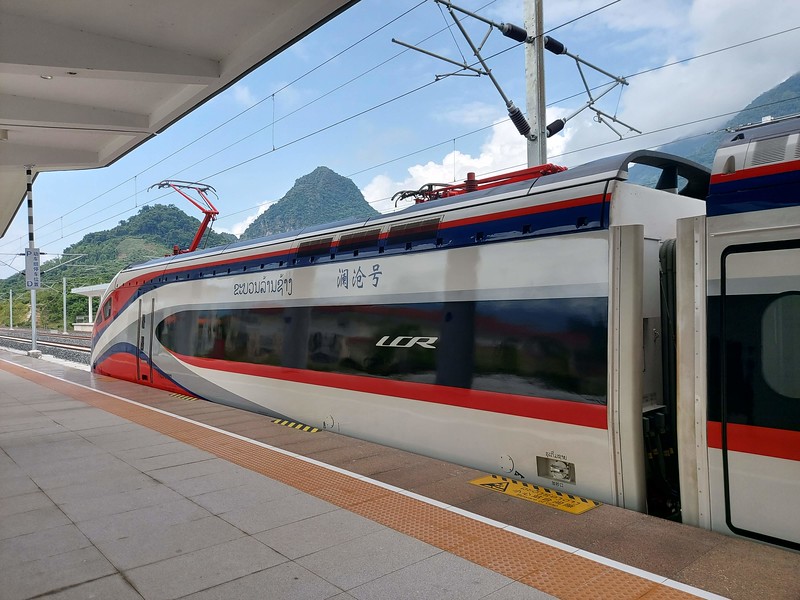
Luang Prabang: A Charming 2 Days

“I would like to sit here, can we switch?” This came from a scary-looking foreign tourist on the China–Laos train bound for Luang Prabang. It was a bit of a shock, why would someone even ask that, I thought. Luckily, I held firm and told him, “I prefer to stay in my seat, sorry.” The guy walked away, and I kept my 37F window spot overlooking the beautiful mountains.

Luang Prabang is the most talked-about spot for tourists coming to Laos. And I needed to see why. I am a city person, but after exploring Vientiane, it made sense to see something else. The train ride from Vientiane was smooth and took only 2½ hours.

China laos railway
The China- Laos Train

A Golden Temple I Actually Liked

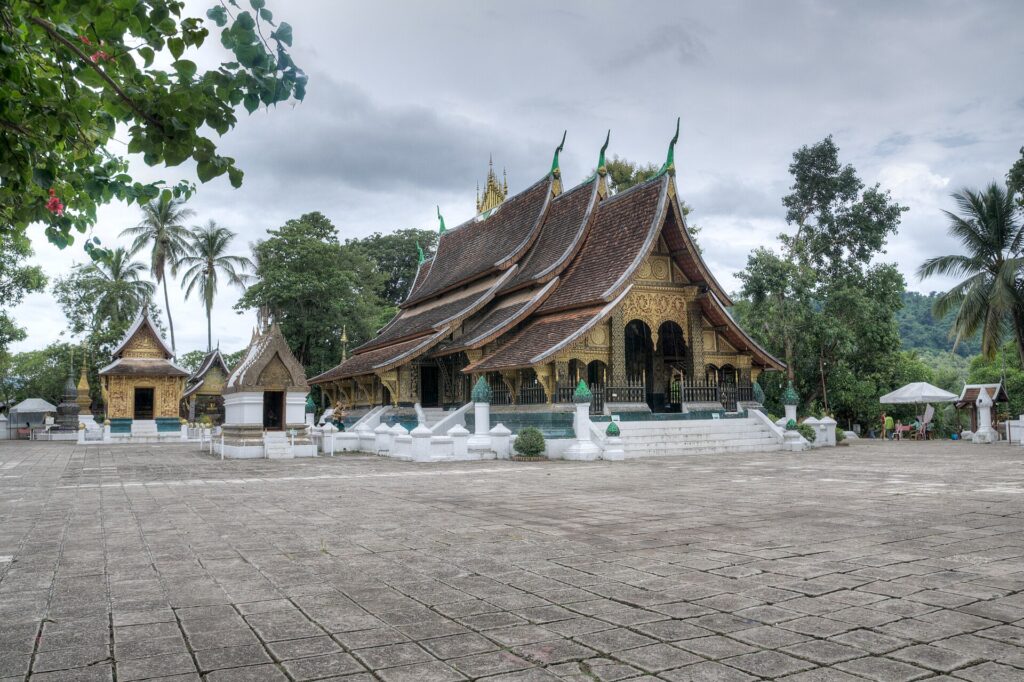
After arriving and checking into the Souphattra hotel (same brand as the one in Vientiane) the first point on my program was, yes, a golden temple. But this one (Wat Xieng Thong) was actually charming. The gold did not feel cheap. Elegant patterns and a nice layout. I later learned the temple had been restored with help from the French and US government not long ago. Who knows, maybe that was the reason.

Wat Xieng Thong

Colonial Streets & Riverfront Walks

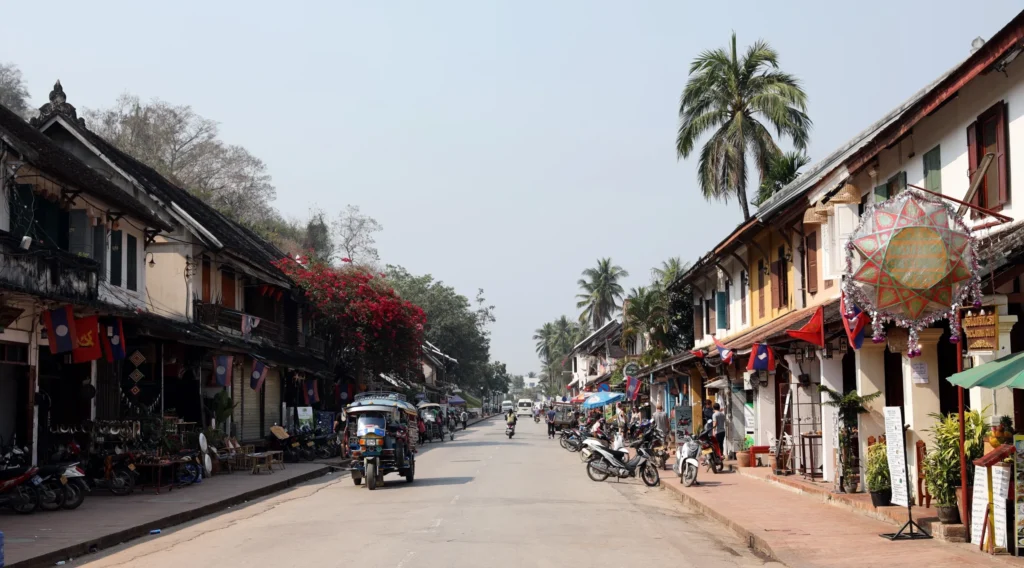
After that I went to other temples that were more in the strong gold line, but I also decided to check out the city center. On an e-scooter, which is fun. The city is charming. A mix between French colonial buildings and Laotian-designed buildings, restaurants, coffee shops, massage places and more.

Luang Prabang downtown

The highlight is the riverfront. Especially near the Riverview Park and walking alongside the Nam Khan River. It’s charming and peaceful.
At the end of the day, I decided (as per the blog I read) to do a Mekong river cruise. Except for two enthusiastic talking Italians and a drunk boatman who kept cheering with me, the boat ride was peaceful.

Early at the Kuang Si Waterfall

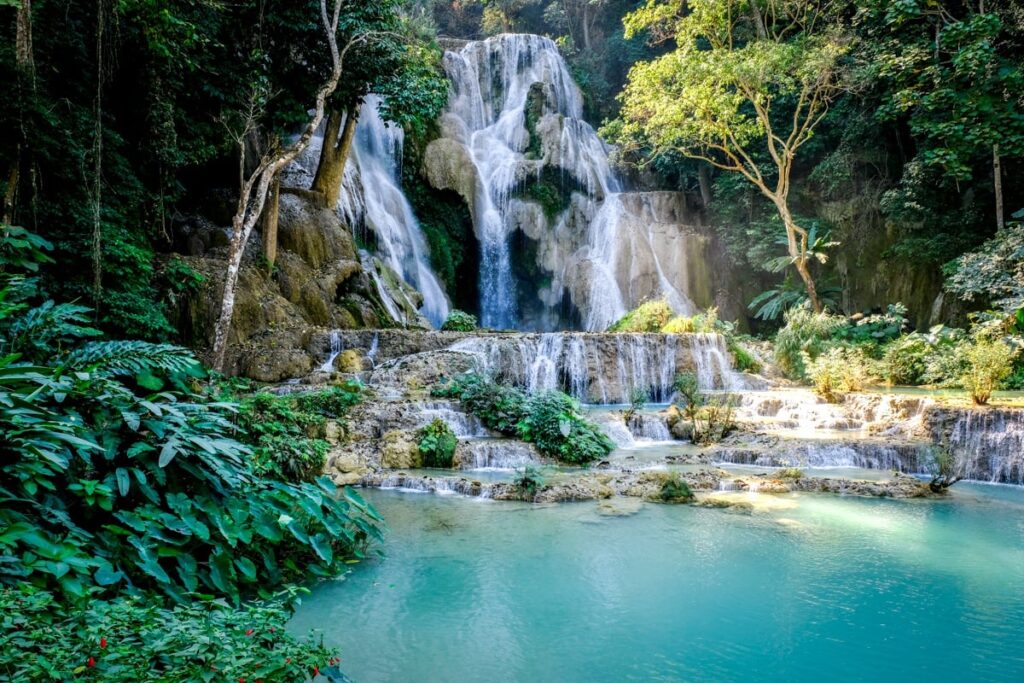
The next day I got up early to see the Kuang Si waterfall. This is the number one attraction in Luang Prabang. Rightfully so, I learned. The waterfall is beautiful, with several plateaus to visit, surrounded by lush trees and clear blue water.

Kuangsi Waterfall
Kuangsi Waterfall

Happy to have listened to the driver who picked me up from the airport two days earlier: “Come at 8:30. You will be almost alone, and only an hour later hordes of people come.” Luckily, I am an early riser.

Phousi Mountain Surprise

After that I went back to the city and tried to get into the City Palace. Everyone was waiting for it to open (Google said 1 PM), but nothing seemed to be happening.

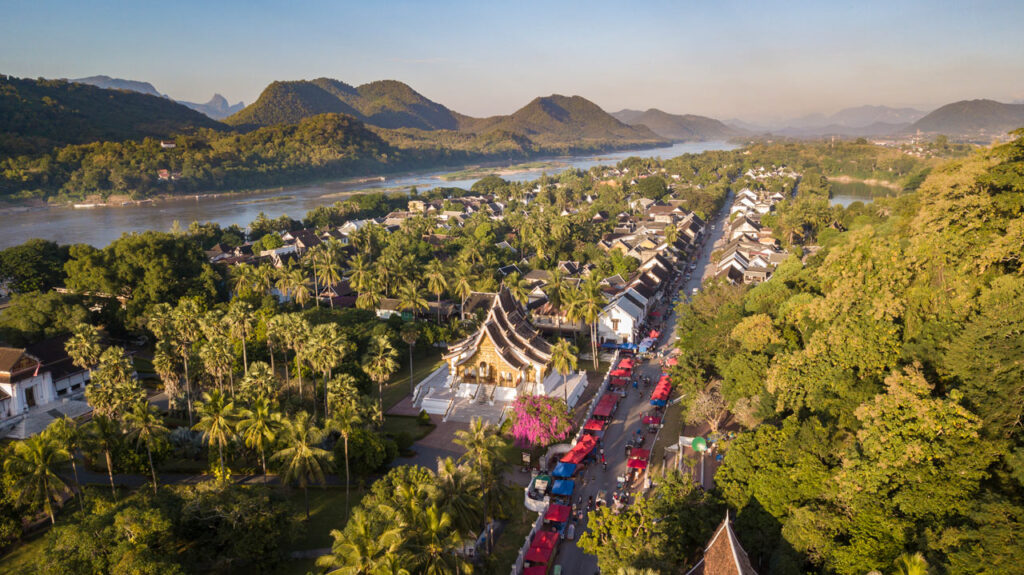
To kill time, I noticed a park entrance on the other side of the road, with stairs leading all the way up. On my way up I discovered this was the famed Phousi Mountain I had read about. Nice to discover it by surprise. It is a Buddhist mountain overlooking the whole city. There is something about places surrounded by mountains..

Phousi mountain
View from Phousi Mountain

The Royal Palace

When I got back, the Palace had opened. This is where, up until not too long ago, the Royal Family used to live. It was built in 1904 during the French colonial era. After renting long pants (shorts were not allowed!), I went in. I always like palaces where the rooms, furniture and details are still intact. You can connect and feel what had taken place. And this delivered.

Morning Charm Spot

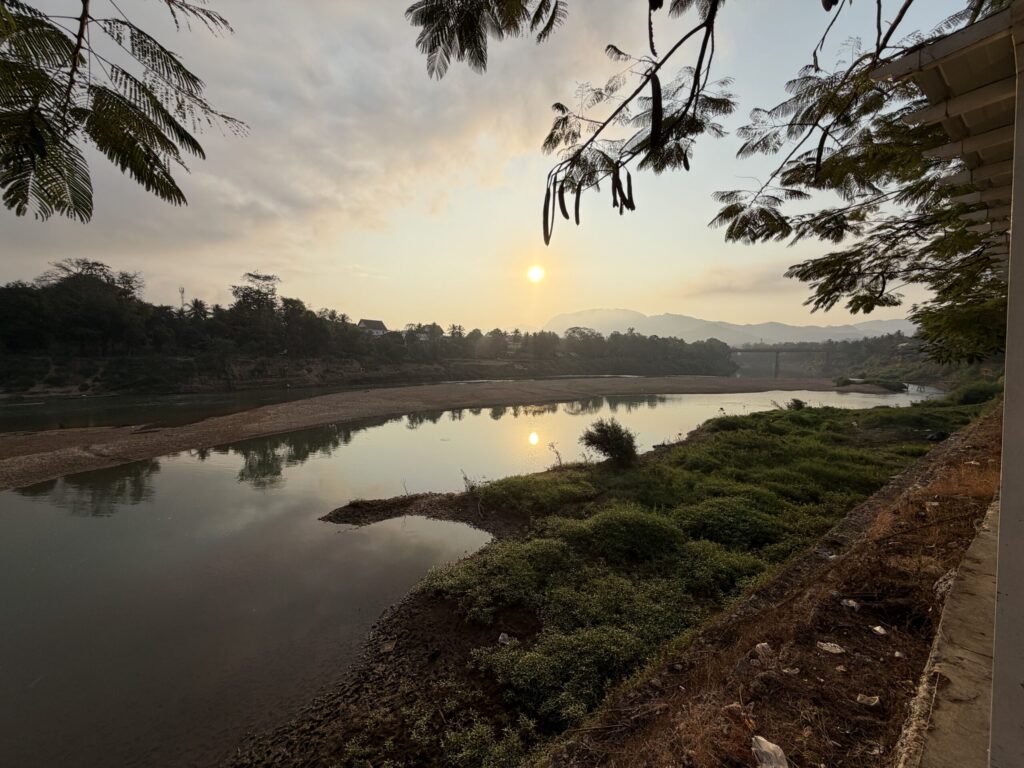
The last morning I looked for charm spots on my scooter. And found one right behind a point where I was standing alone riverside with the rising sun. Right before the old French birdge (which is fun to cross also). I did have to pass an angry barking dog for it but it was worth it!

Early morning sunrise view

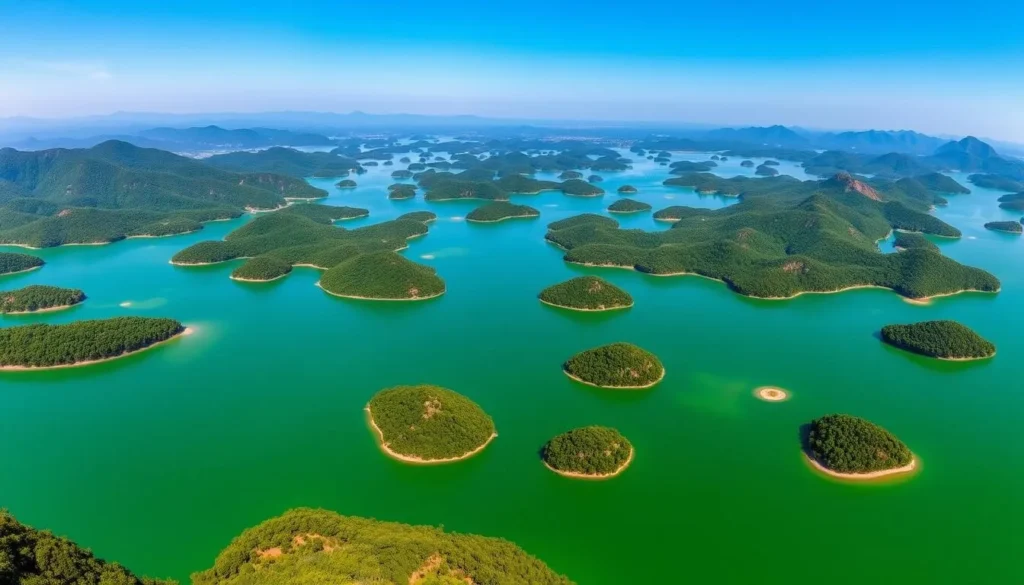
Later I went back to Vientiane airport, and about 10 minutes after my airplane took off to Shanghai I saw a lake with many, many islands in it. It looked truly beautiful. Upon searching later, I learned this is likely Nam Ngum Lake . Something to come back for!

Nam Ngum Lake

Vientiane: The Quiet Capital

I’ll be honest: the main reason I went to Vientiane was simply that I had never been there. Shanghai recently added direct flights, and I went in almost completely blank. I knew it was supposed to be peaceful, and that was about it.

The Arrival & Souphattra Hotel

We landed around midnight. Getting into a taxi was interesting. The driver turned the wheel left and right constantly, and I had some suspicion his eyesight wasn’t the best. Luckily this is Laos and the streets were completely empty, unusual for an Asian capital, even at midnight. But in this case, a lifesaver.

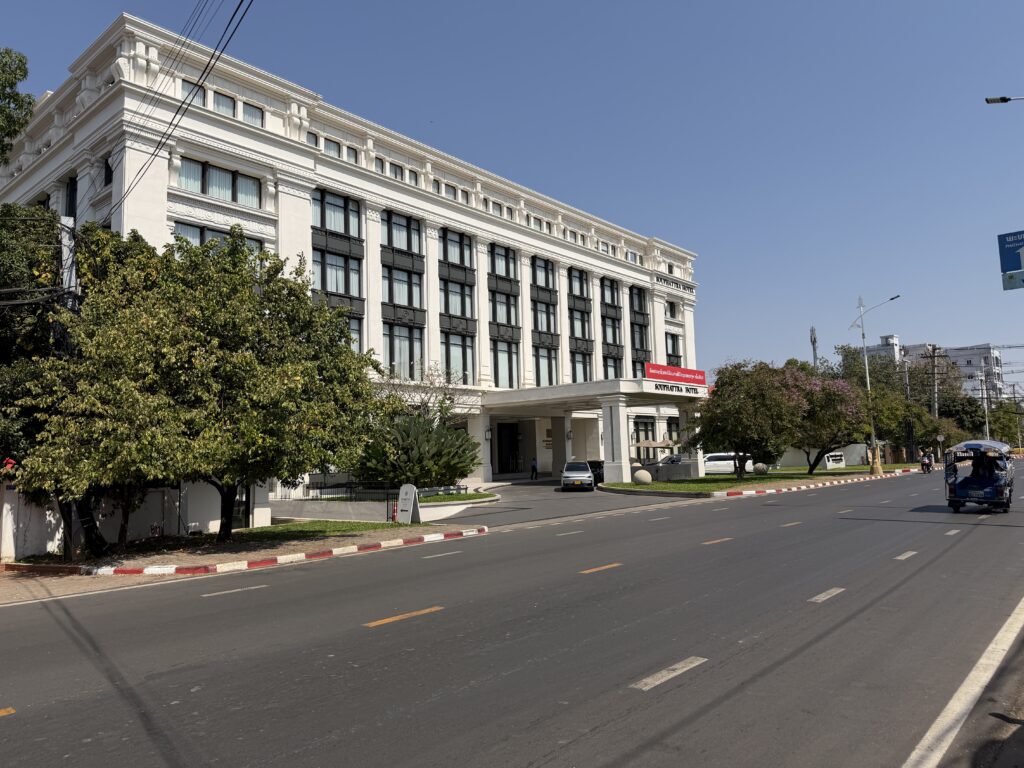
Souphattra Hotel Vientiane

I arrived at Souphattra Hotel in the peaceful embassy district. Again: silence. No one there except the receptionist. The English level in Laos is a bit more challenging compared to its neighbors, and I got my first taste of that at check-in. Interestingly, some staff spoke Chinese, so I ended up using my Mandarin to communicate.

This hotel, which only opened in 2024, is unusual in that it delivers international luxury standards while being locally owned. It’s located in a quiet district, yet everything is within easy walking distance.

A Walkable City 

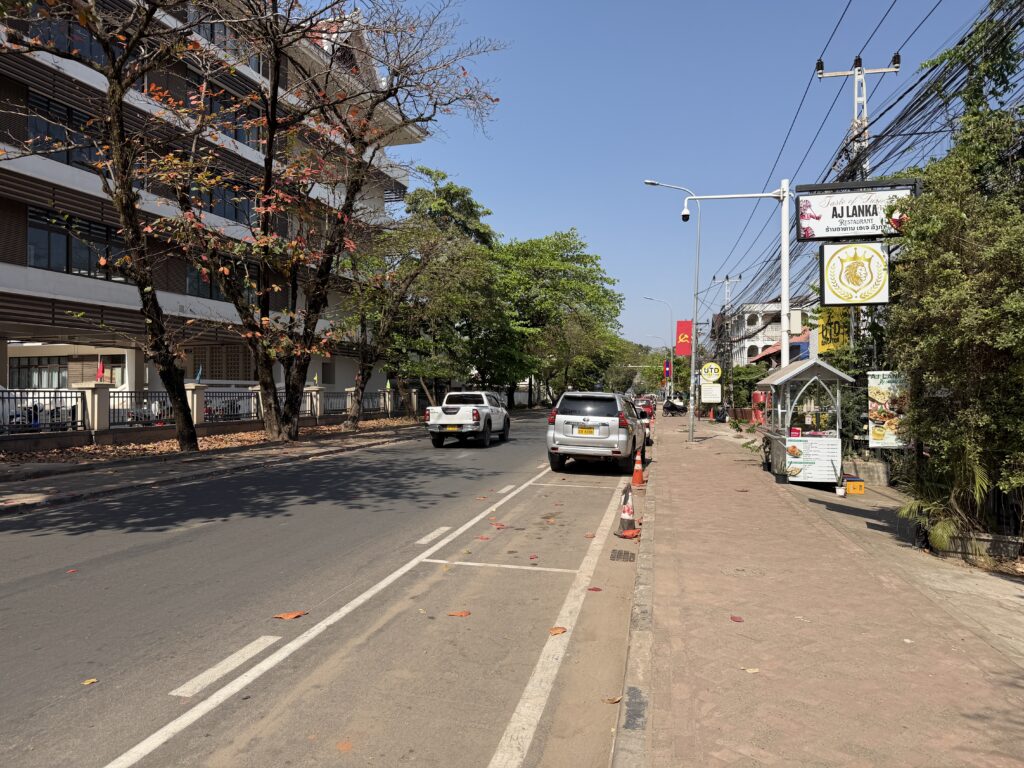
The next morning, I walked. That is the first thing that sets Vientiane apart from cities like Bangkok or Jakarta: it is actually walkable. Not Shanghai or Singapore walkable, but good enough. And for me, that feels like freedom.

Vientiane is walkable

I picked up a coffee at Starbucks and started to explore. Vientiane doesn’t have a great reputation online. Many people say “skip it” and head straight to Luang Prabang (where I’d go later). I always wonder what that means if people say a city is boring. Does it mean the general vibe, or a lack of attractions or sights? I was about to find out!

Golden Temples & The Dutch Connection 

I started at COPE, a center that Barack Obama visited about ten years ago, dedicated to supporting people with disabilities caused by the relentless bombing campaigns of the 1970s.

After that, I walked to several of the famous temples. I have to admit: I’m not a fan of the “golden temple” aesthetic. To me, they often feel too glittery, too intense, too overloaded with color, almost overdone. They lack the quiet mystery of ancient stone sites like those you find in Siem Reap or Delhi.

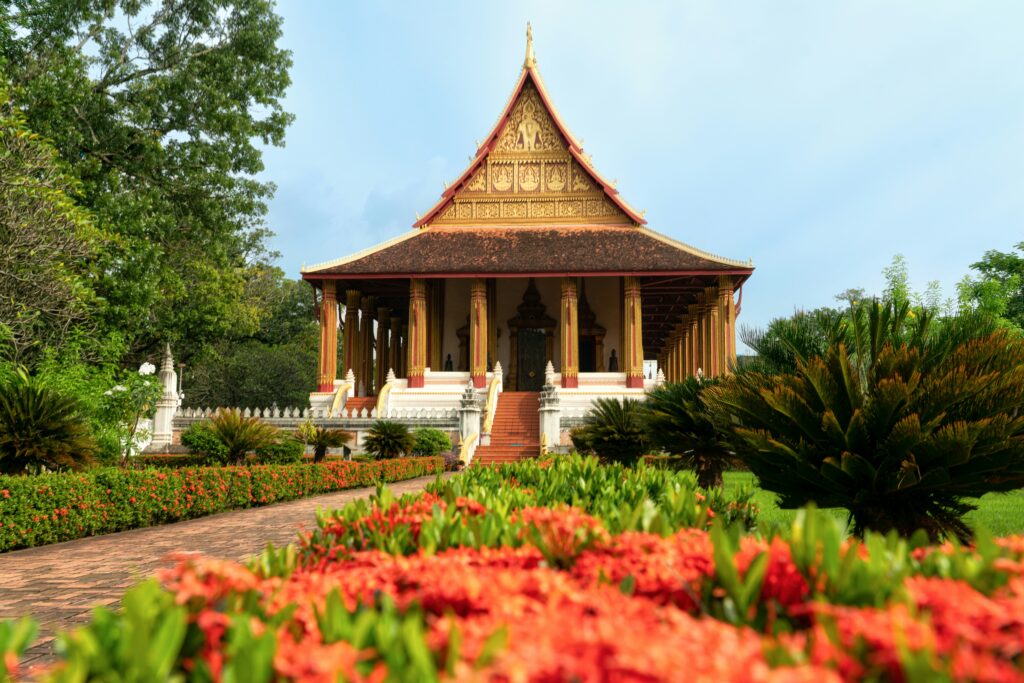
Wat Ho Phra Keo

I visited Wat Ho Phra Keo, a former temple that once housed the Emerald Buddha. The statue itself is surprisingly small, yet it is considered deeply sacred and now resides in Bangkok. Interesting..

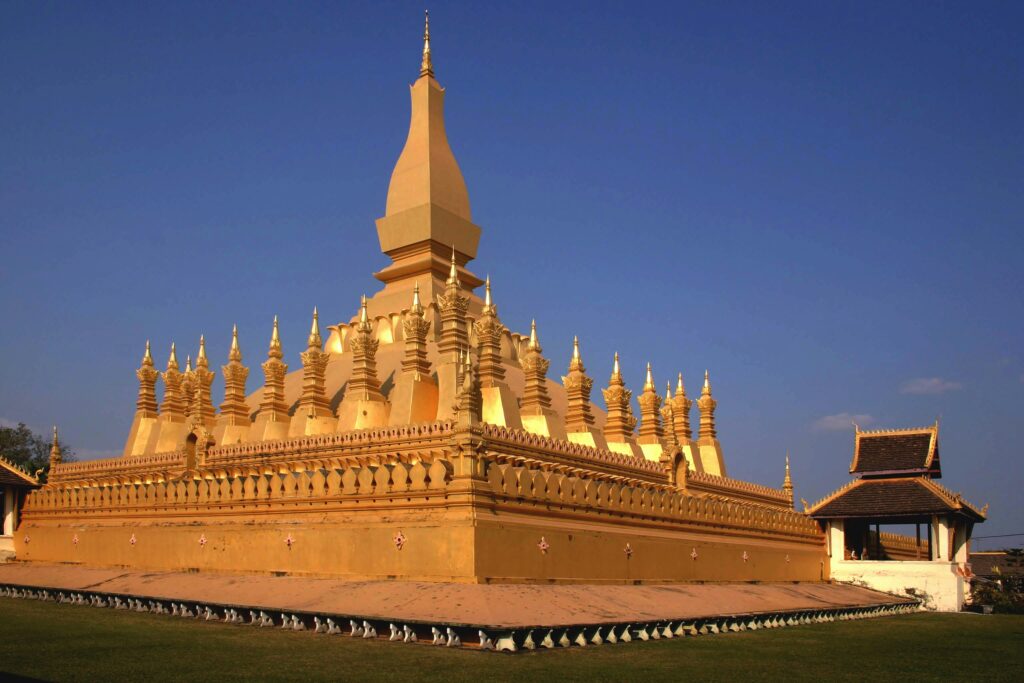
I also went to the most famous Pha That Luang, the golden symbol of the country. Apparently, a Dutch explorer named Gerrit van Wuysthoff arrived here (as the first ever European to visit) on an invite from the King centuries ago. Standing in the exact same place where a fellow Dutchman stood 300 years ago… Context matters.

Pha That Luang

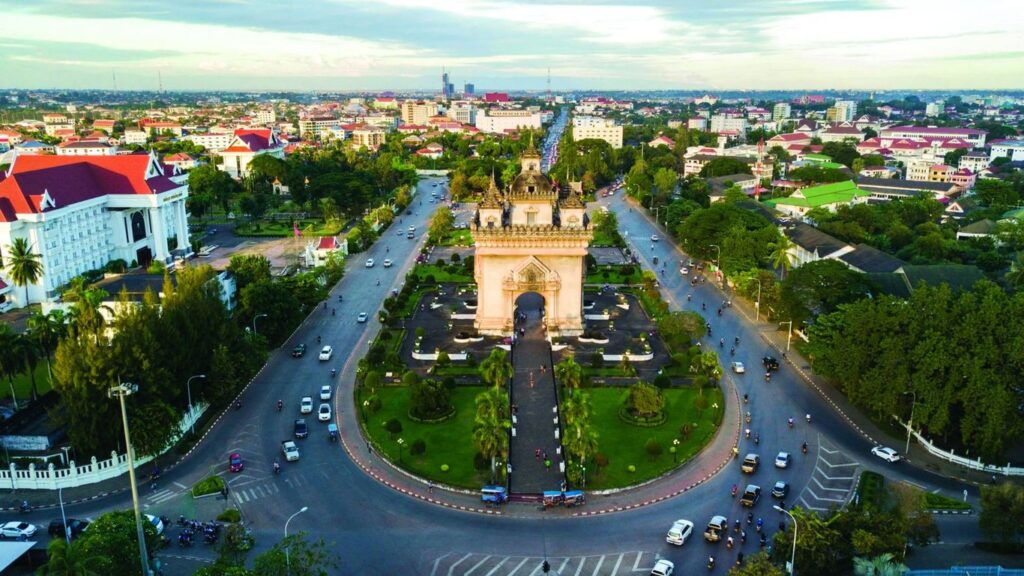
I visited a few other temples as well, and the somewhat forced Buddha Park just outside the city. The local Arc de Triomphe, Patuxai, is also worth a stop. But whether a place impresses you or not, going there gets you moving. You walk, you drive, you notice things. You start to feel the rhythm of the city. Often, the journey matters more than the destination.

Colonial & Old Center and great vegan food

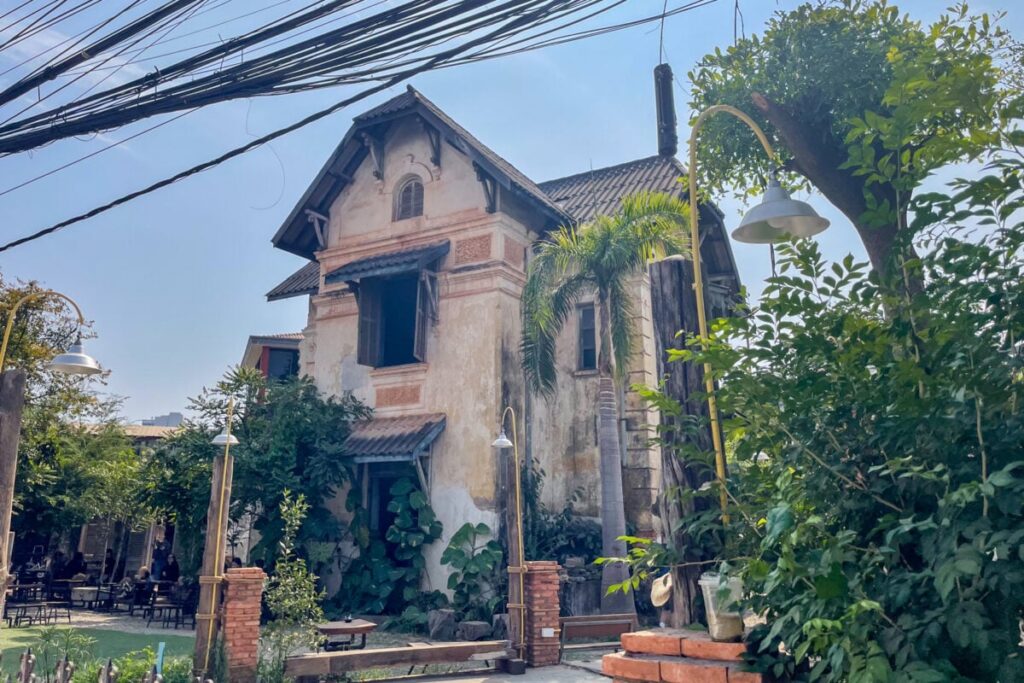
An area that I started to like more was around an ancient Stupa called the That Dam (Black Stupa). Around it were colonial buildings and cafes. I am always drawn to former colonial areas somehow. And I am not the only one. With its French past, Vientiane houses many colonial buildings. I did not find a beautiful cohesive colonial district like in Shanghai, Hanoi, or even Phnom Penh; in Vientiane, things are a bit more messy and scattered. But still it is there.

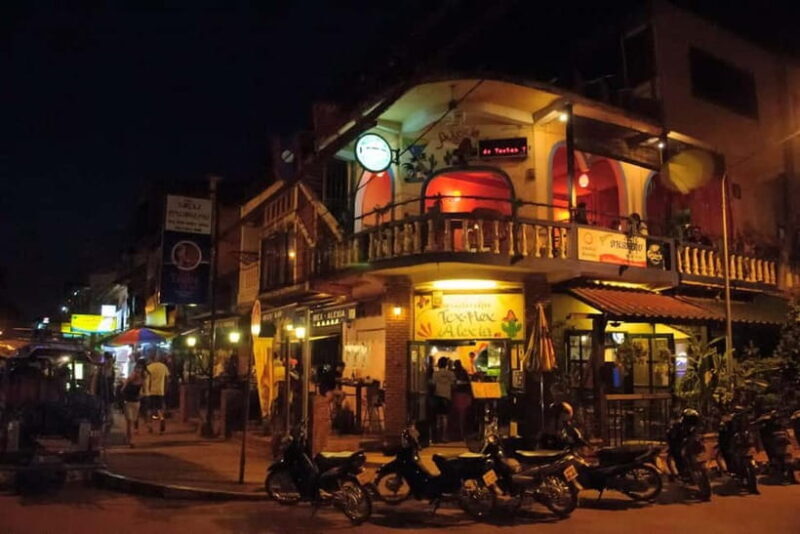
This area led me to the hotspot for tourists: the downtown area close to the Mekong River and the night market. It is full of bars, restaurants, yoga studios, massage places, and hotels. Many international tourists. The vibe here is definitely the most “happening” you will get in Vientiane. And i found myself going back here from time to time. I ate fantastic vegan food in a charming French restaurant La Cage Du Coq. As often the best vegan food can be found in non-vegan restaurants!

The Mekong Walk 

The next day I decided to spend time walking the Mekong River on both sides. The rows of bars were fun, but to the north, the pedestrian side narrows down with no guardrails on one side. Even though it was elevated, I started to feel a bit uncomfortable (luckily I survived!).

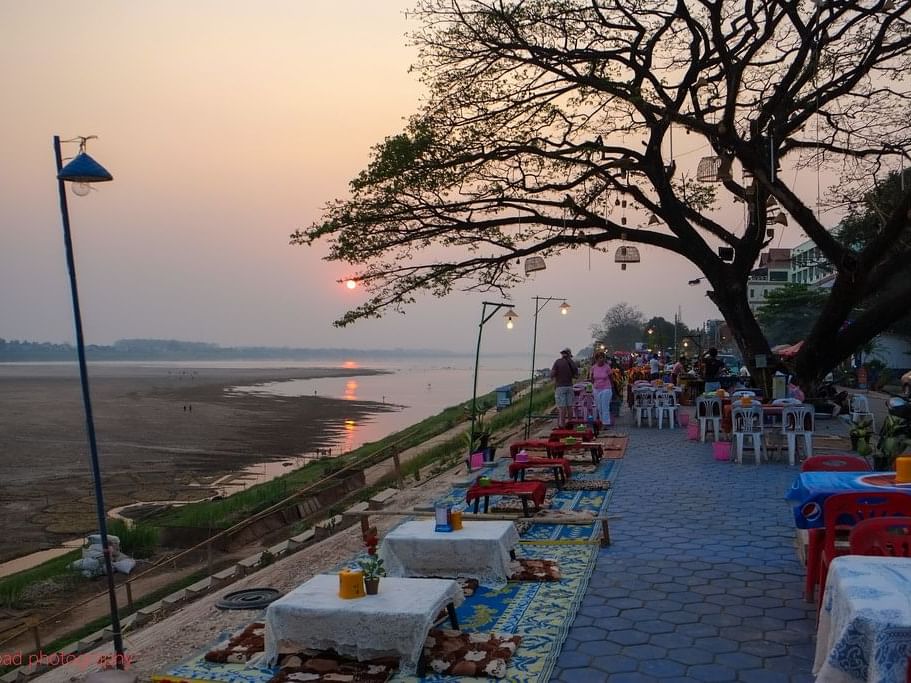
Further south along the Mekong, I walked to the Chinese embassy area. Lush houses and buildings are spread around here. But the Mekong is at its best at sunset. Looking across the water, realizing that the lights on the other bank are Thailand, has a quiet sort of magic. I saw a bar called Kong View that looked like a great spot to take it all in.

The Lao Art Museum Surprise 

I had a third day because I couldn’t get a ticket to Luang Prabang, and this actually gave me a surprise. En route to the Laos National Museum, the cab driver advised me to go to the Lao Art Museum located outside of the city instead. I wasn’t planning on it, the National Museum had been a bit outdated, but I decided to give it a try.

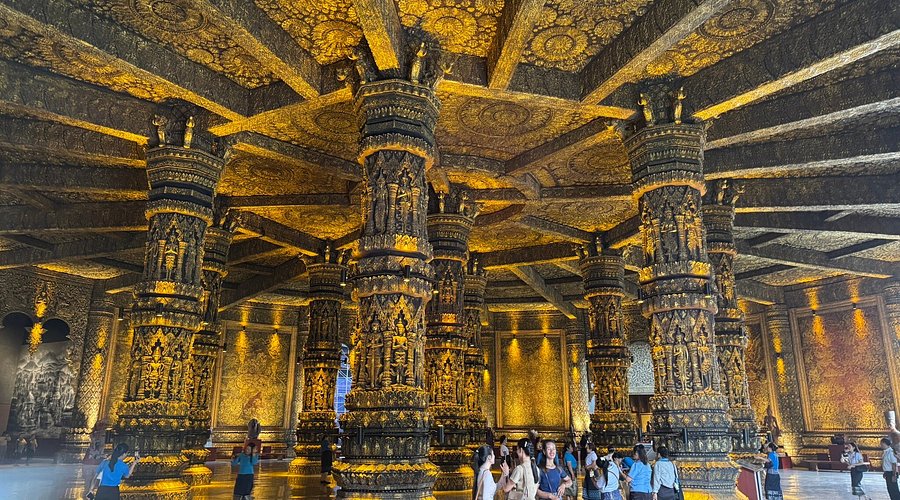
I am so glad I did. It was a “wow” experience. The building itself is beautiful, the kind of temple vibe I want to see. More delicate, with a nice, dimly lit, classy interior. The museum hosts wood-crafted objects and characters. The entrance features incredible wooden pillars and carved figures that set a magical tone immediately. It was a museum done right, with a peaceful garden to sit in afterwards.

Lao Art Museum

Reflection 

Vientiane is a low-shiny, low-pressure city. It doesn’t have endless “must-see” monuments. But it has things to explore and is interesting enough. The people are also very kind and gentle.

My personal favorites were the vibrant old city around the night market, walking past the Mekong River, and the Lao Art Museum. For hotel I strongly recommend Souphattra Hotel and for food La Cage Du Coq. Next stop Luang Prabang.

The Taj Mahal & Pink City

Bill Clinton, after visiting the Taj Mahal, supposedly wrote in the guestbook: “There are two kinds of people in the world. Those who have seen the Taj Mahal and those who haven’t seen it.”

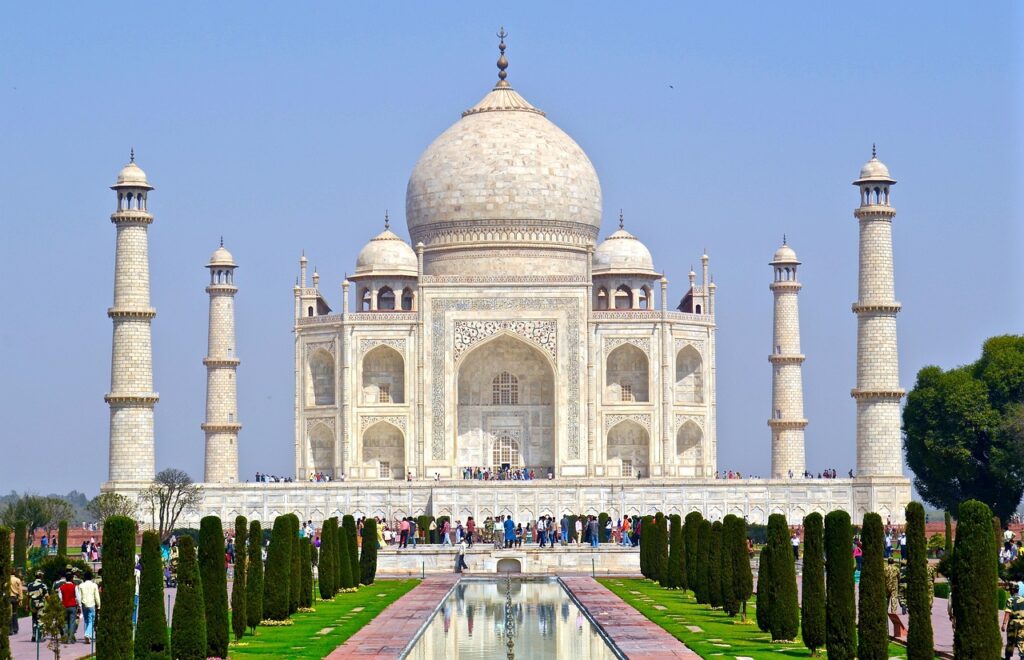
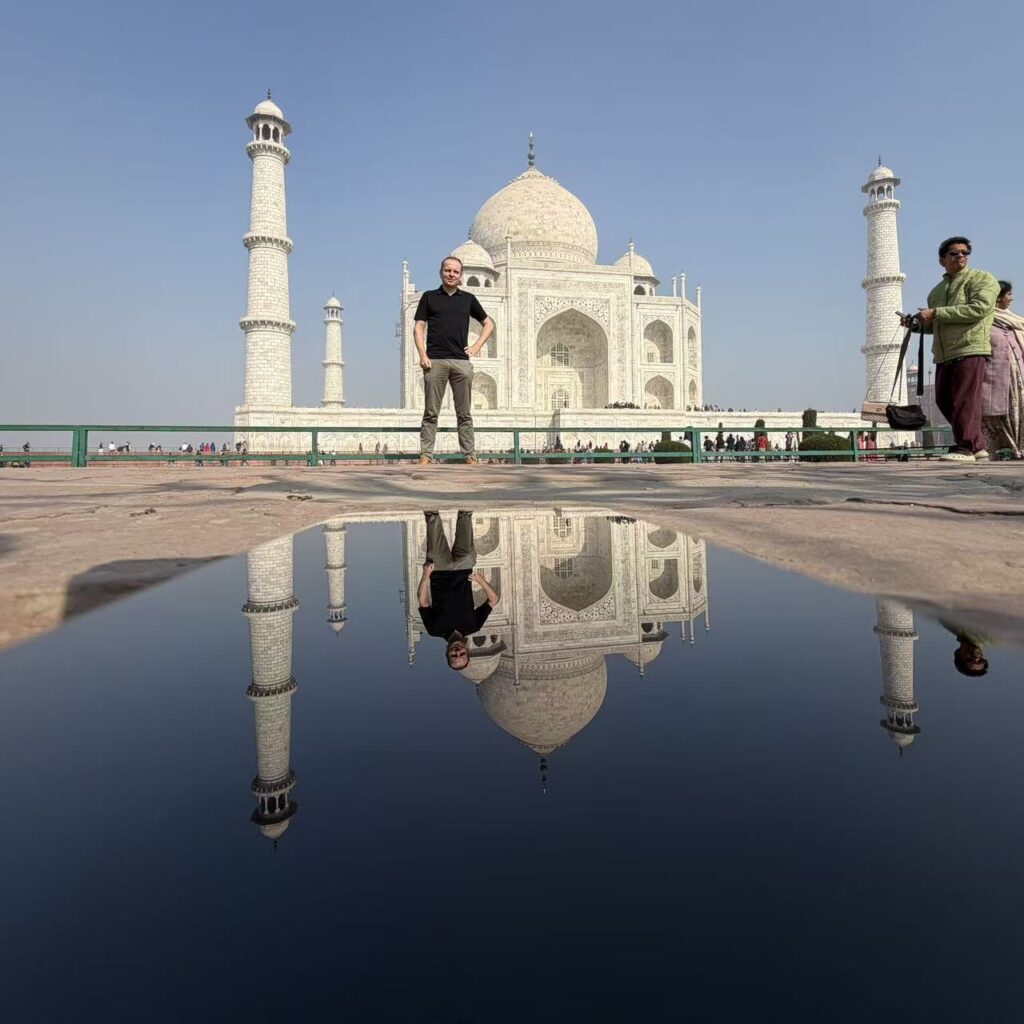
My tour guide told me this quote after I tried to explain the impact the monument had on me. I am usually not one for busy tourist sights packed with crowds. I prefer to get a clear, quiet view before I let myself get “wowed.” But the first time I got a glimpse of the Taj Mahal, despite peeking through a gate with hundreds of loud people in front of me, I felt something shift. It looked like a painting waiting to be unveiled. And I realized then: the hype is true.

The Taj Mahal: Why It Works

Learning the history adds to the impact. Built by the Mughal emperor Shah Jahan to remember his beloved wife, Mumtaz Mahal, it stands as the ultimate symbol of love. My guide told me this story is why so many couples from all over India flock here, it’s seen as a sort of blessing for their relationship.

Maybe it is the white marble (is that why it creates such an expressive effect?), or maybe it is the four beautiful minarets surrounding it that add to the mystique. Walking there, I caught myself dreaming about being Bill Clinton or a VIP, having the place all to myself. But this very “unimportant person” had to share it with the crowds. And it was still magical! I am now one of the proud “have seen the Taj Mahal” people.

The Baby Taj & Fatehpur Sikri

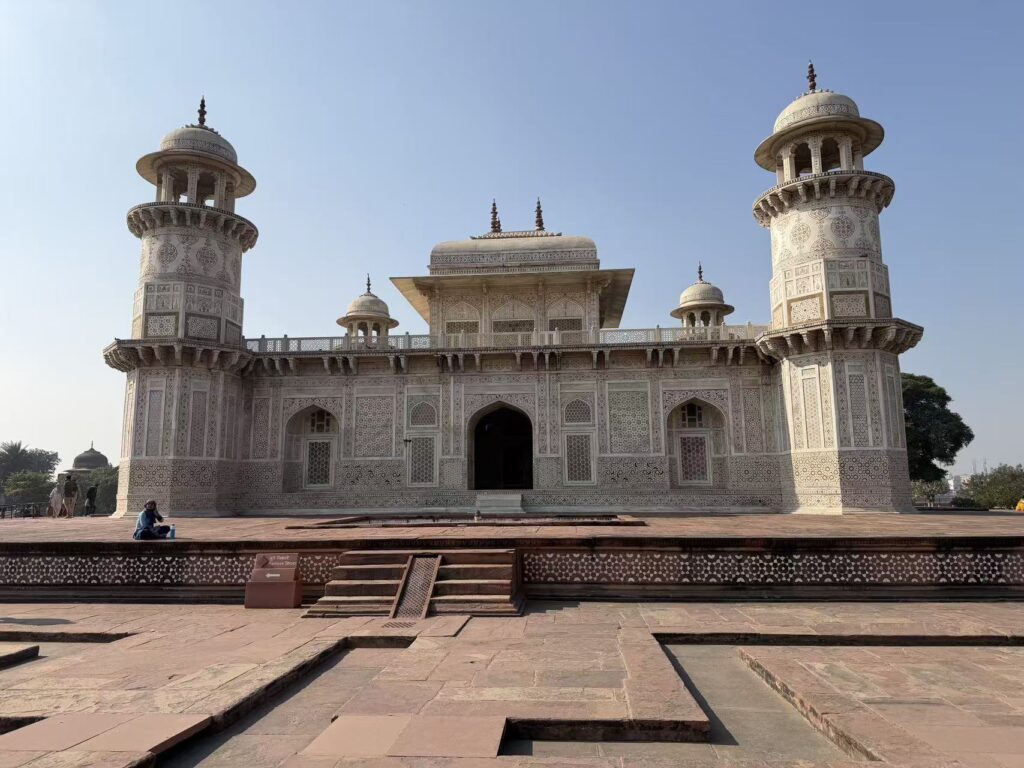
In Agra, there is also the Tomb of I’timād-ud-Daulah, often called the “Baby Taj.” An acquaintance living in Shanghai had told me I must see it. We didn’t have much time, we had spent four hours coming from Delhi and still had a long drive to Jaipur ahead, but I insisted.

After battling crazy traffic, we finally reached it. The Baby Taj is beautiful, delicate, and peaceful. I learned it was built before the Taj Mahal and the Taj Mahal was actually inspired by it. It was well worth the visit.
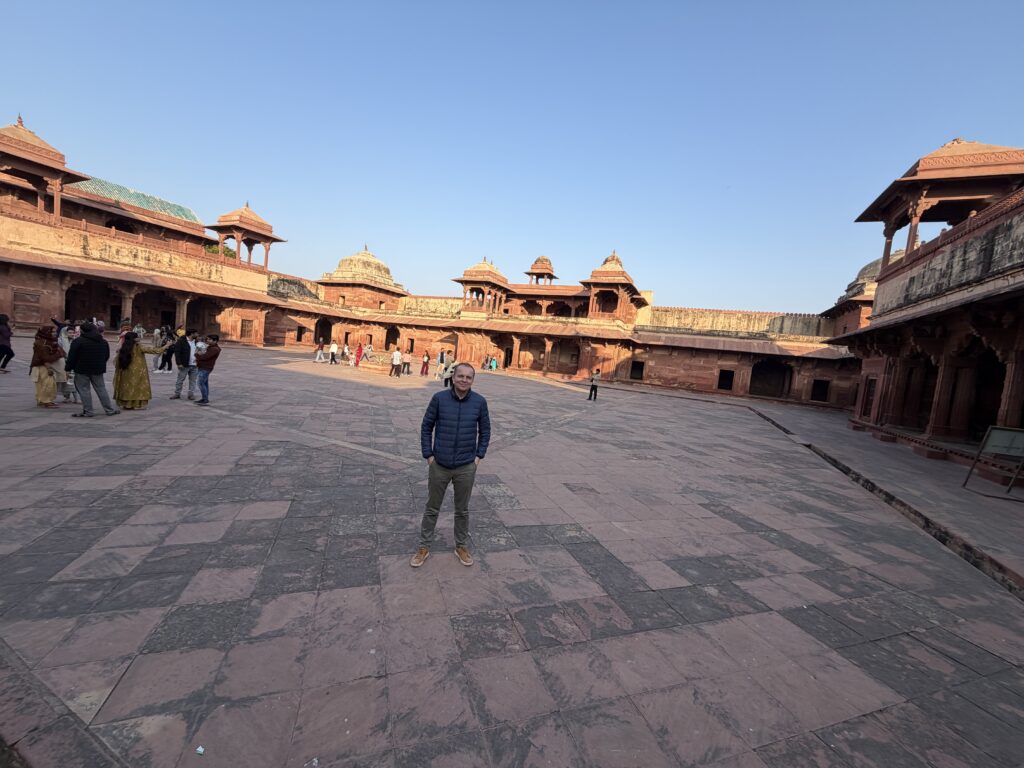
We also stopped at Fatehpur Sikri on the way out. Fatehpur Sikri is a fortified city built by Emperor Akbar as the Mughal Capital. I always like visiting places late afternoon. Serene and peaceful. I saw the Buland Darwaza (the highest gate in the world, or so the self-appointed guide told me) and the mix of Mughal and almost Chinese-style architecture. It was a peaceful end to the Agra visit.
The Road to Jaipur: Conversations

The drive to Jaipur, in the province of Rajasthan, took about four hours. My driver and I got off to a rough start, but ten hours in a car together changes things. He started to open up, telling me about his life in a small village outside Delhi and how he was saving for his daughter to go to Europe. He also shared stories of the biggest tips he had ever received. As with many conversations in India, money was a motivation, but I understood it. And I was already contemplating the tip i would give him at the end. So it worked..

Amer: The Hidden Gem

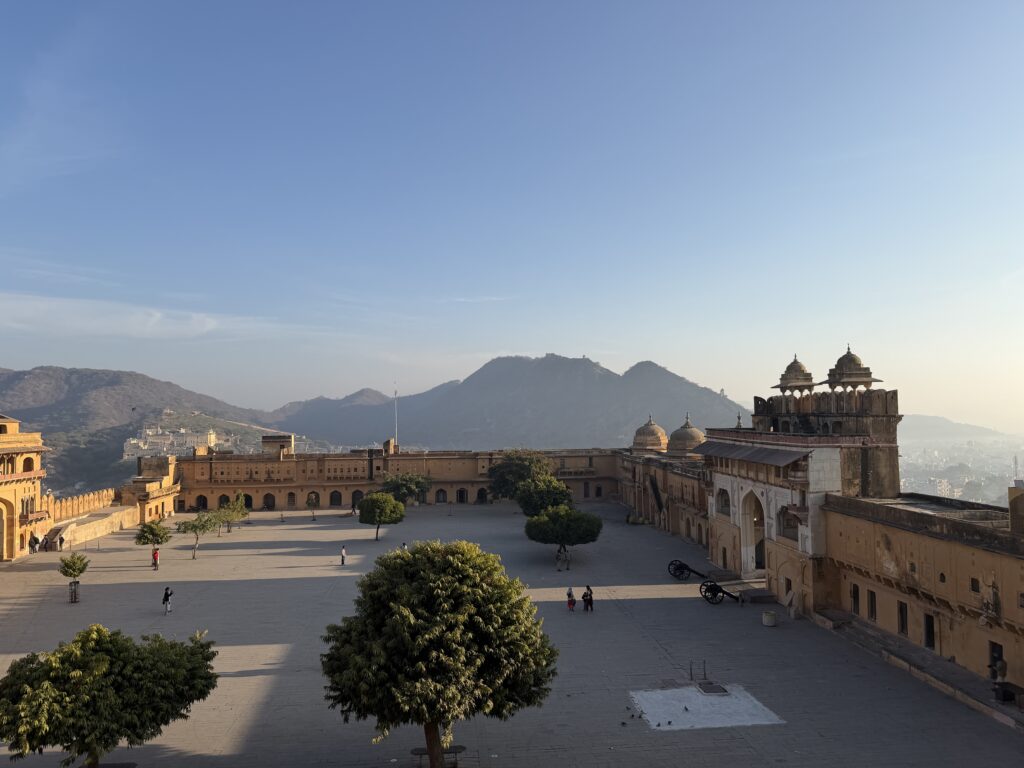
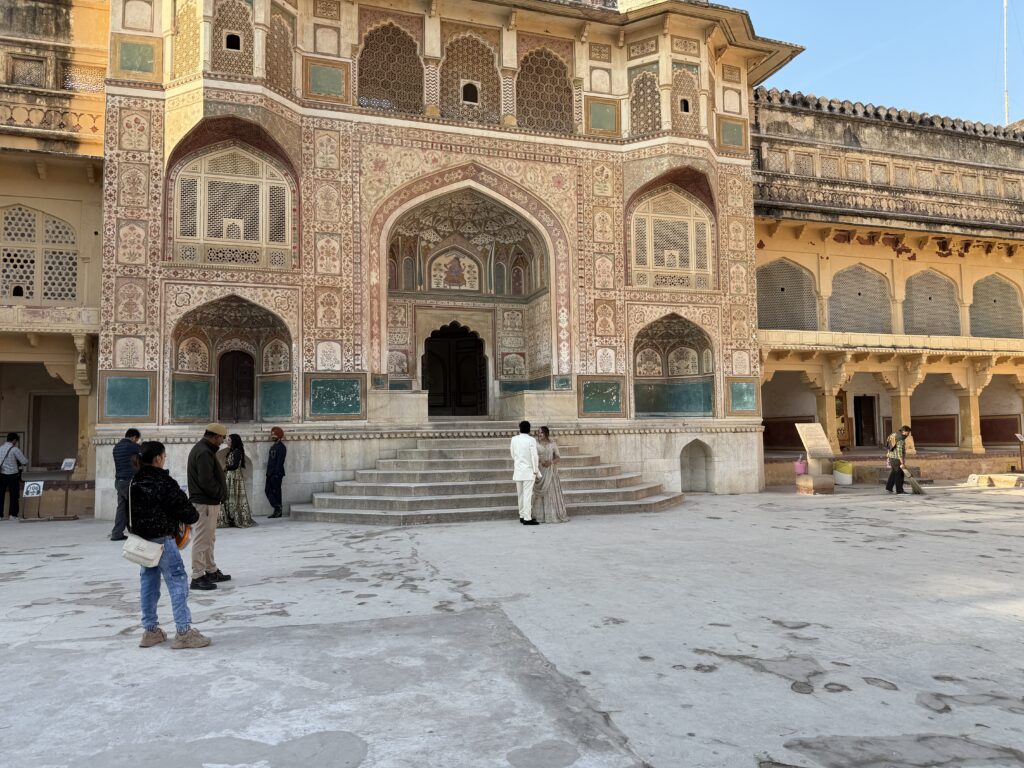
We arrived in Amer, a charming village adjacent to Jaipur. For me, Amer was special, surrounded by mountains, relatively quiet, and home to my favorite sight: the Amer Fort. Another Unesco World Hertiage site. This fort is famous for its mirror hall which has 800.000 mirrors.

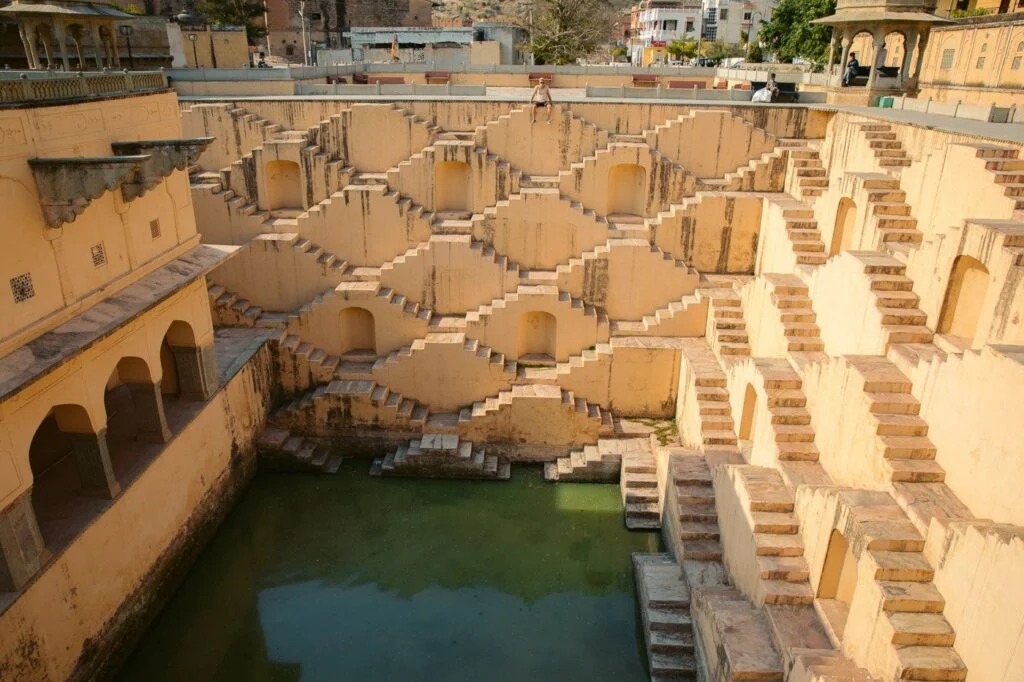
Then, following a tip I got from ChatGPT (my trusted friend), I asked to see the stepwell in Amer (Panna Meena Ka Kund). It is small, tucked right inside the village, but incredibly charming and symmetrical. Definitely a spot you want to see.

Jaipur: The Pink City

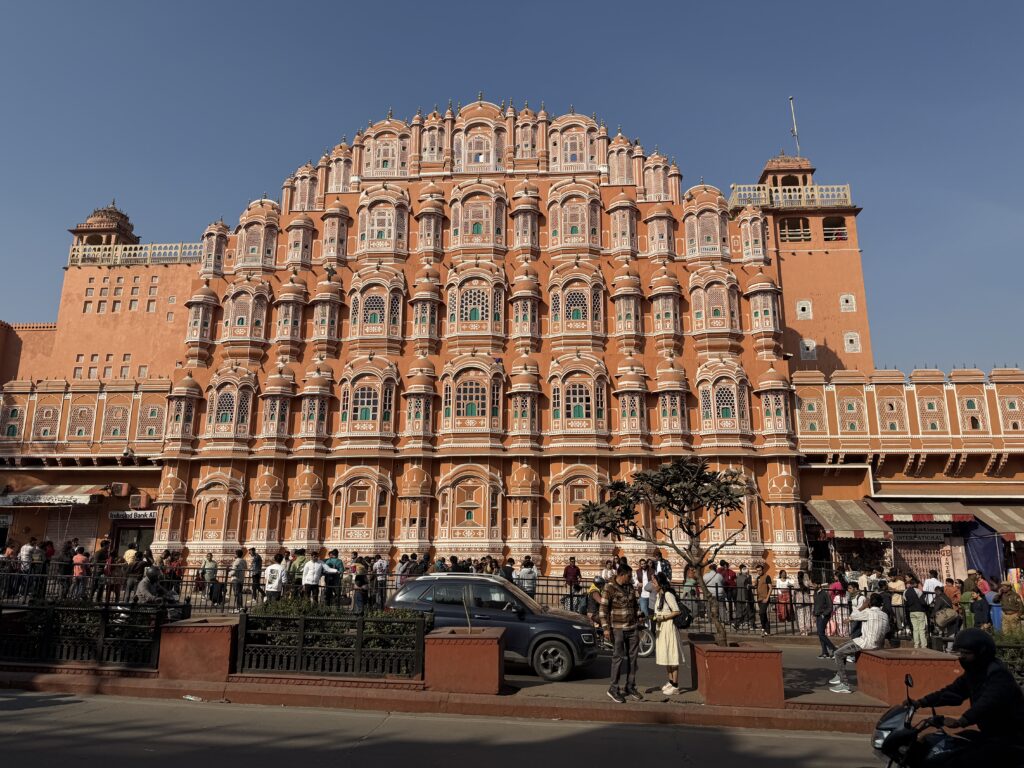
Finally, Jaipur itself. The story goes that in 1876, the Maharaja painted the entire city pink to welcome Prince Albert, the husband of Queen Victoria. The color symbolises hospitality, and it stuck.

The highlight here is the Hawa Mahal (Palace of Winds). The Emperor had it built for his harem so the royal women could watch life on the street and connect with the outside world, perhaps while sipping their tea, without being seen themselves. I also visited the City Palace, which was interesting, but for me, the Amer Fort remained the clear winner.

Hawa Mahal

The Goodbye 

I ended the trip with a visit to a zoo park near my hotel, followed by a traditional Indian dance performance and a final, quiet cup of tea.

On the last day, the driver took me back to Delhi Airport. I said goodbye and pressed a good tip (I hope!) into his hand. India had been quite an experience; intense, chaotic, and fascinating. I definitely plan to come back!

Delhi: Four Days of Contrasts

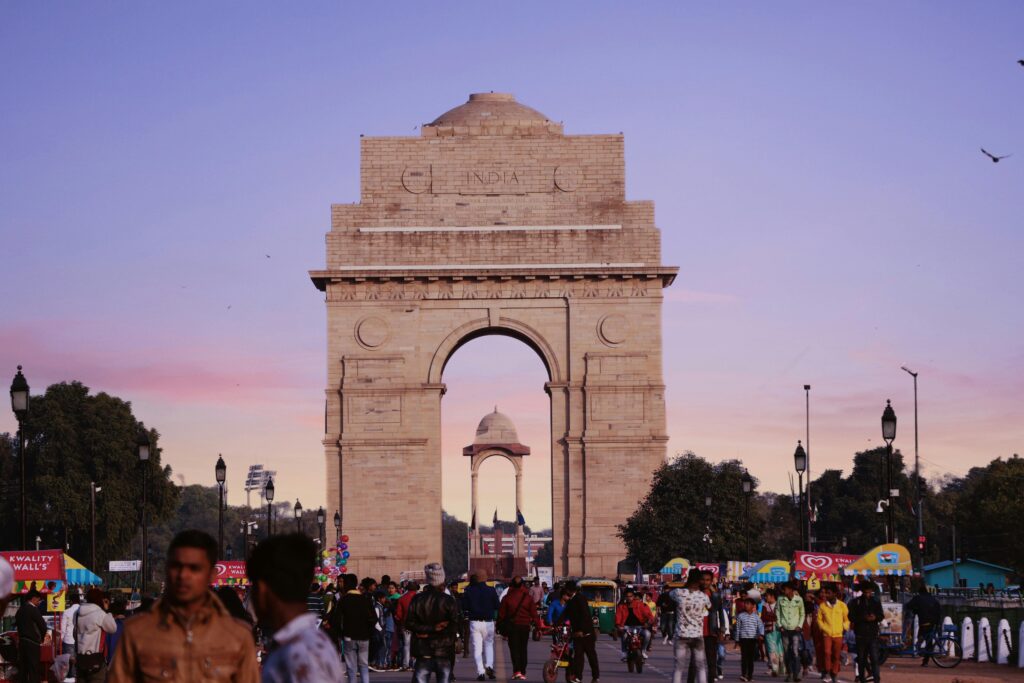
Delhi gate

Before I went to Delhi, someone told me the city could be an “assault on the senses.” That was certainly true. It started with the heavy pollution, the crazy traffic, and the visible poverty that hits you the moment you step outside.

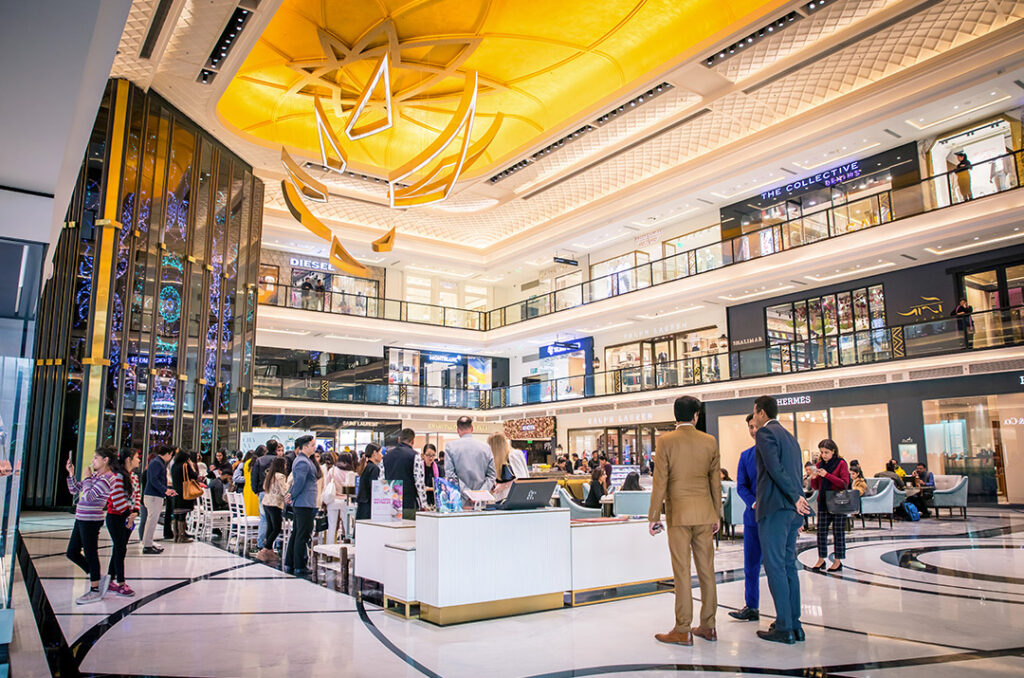
That first morning, I took my usual walk out of my hotel in South Delhi. Delhi is not great for walking, but I tried. After five minutes, I entered a dirt-poor street where people who looked like they had nothing were sitting on the pavement, staring into the distance. Then, on that very same street, I stood before the entrance to the Chanakya Mall. An ultra-luxury enclave for the rich to escape reality. Or so it felt. I admit I was happy to go in myself and have my hot chocolate in my own little world.

Imagine this mall on a dirt poor street

Ancient Tombs & Lodhi Garden

After that experience, I got my first taste of what I would love about Delhi the most. I entered Lodhi Garden.

At first, two locals approached me saying, “Country, country?” I quickly figured out they just wanted to know where I was from. When I said “The Netherlands,” they nodded in a friendly way and walked on. This would not be the last time people asked me this.

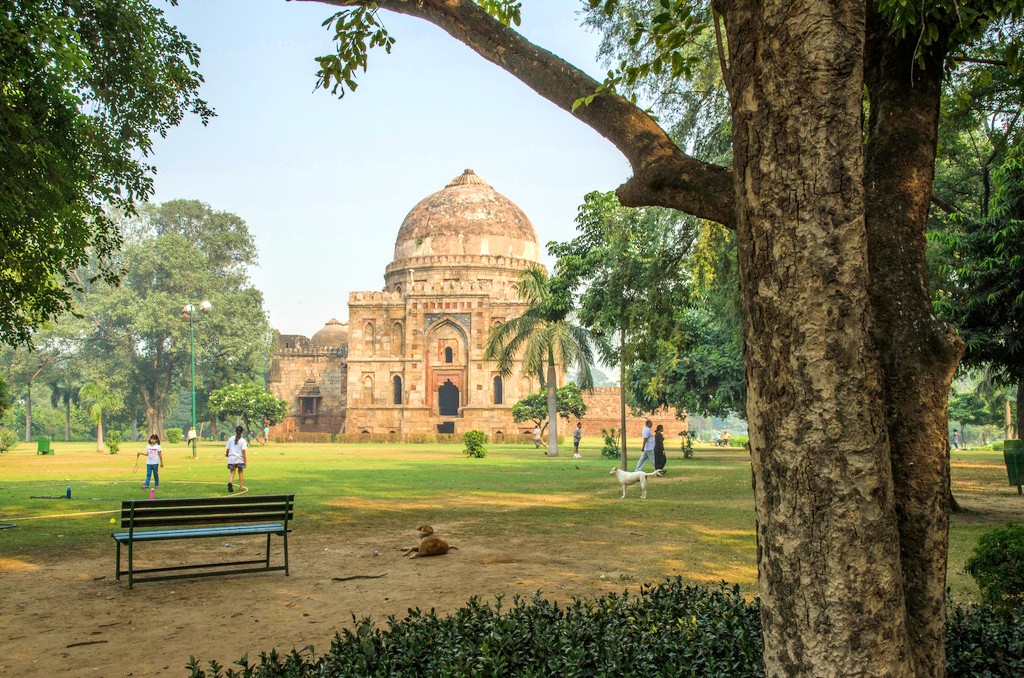
Ancient 15th-century tombs inside Lodhi Garden, Delhi
Lodhi Garden

Lodhi Garden is a public park, but what makes it special are the ancient 15th-century tombs dating from the Delhi Sultanate. I was oblivious to this history before coming. I expected colonial buildings to be the main sight, but this ancient architecture became what I loved most during my five days here. In Lodhi Garden, these structures aren’t fenced off museum pieces. They are part of society. People interact with them naturally. It felt like we were just discovering them together. It reminded me of Siem Reap in Cambodia. Ancient, accessible, and alive.

Humayun’s Tomb, Ignoring Google

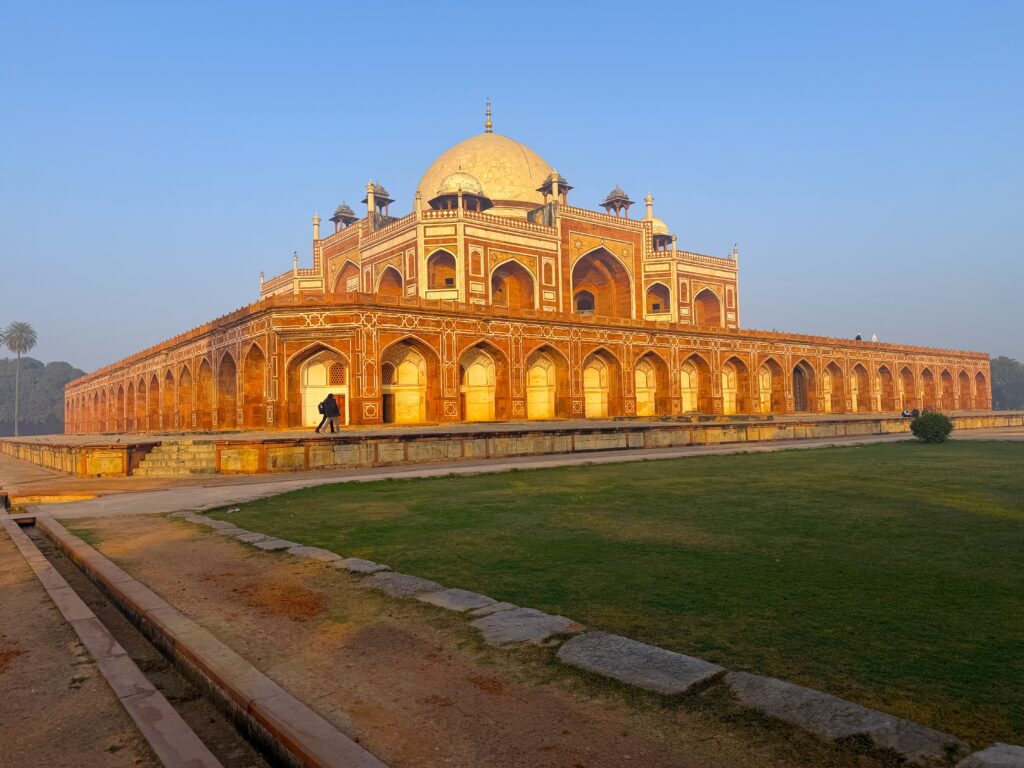
On the second day, I ignored Google’s opening times (a good decision) and arrived at Humayun’s Tomb around 7:30 AM. Built in 1558 for the Mughal Emperor Humayun, it served as inspiration for the Taj Mahal. The most striking thing was that I was completely alone. Being alone with the tomb in its original state, I felt like an archaeologist discovering it for the first time.

Humayun’s tomb

Qutub Minar and Cows

Delhi (and much of India) has an unusual traffic participant: the cow. Seeing them calmly occupying the street and often stopping traffic altogether can be surprising at first. On one occasion, it even delayed my arrival at my next destination. Yet there is also something quietly beautiful about it: a deep respect for animals.

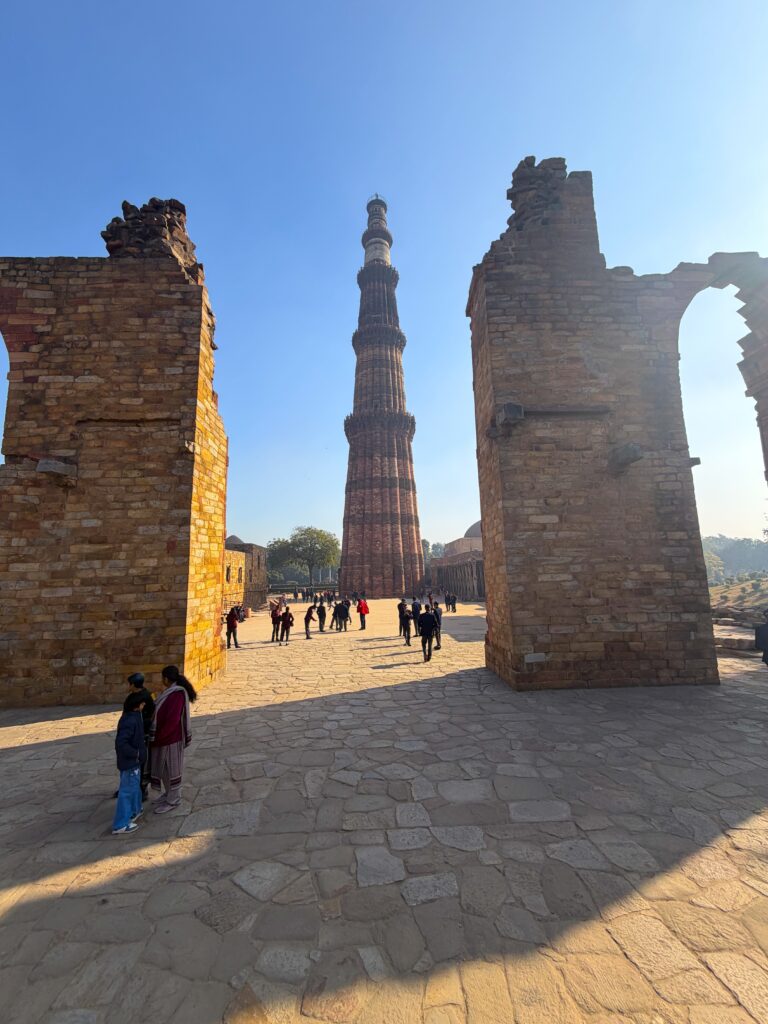
Qutub Minar

A bit later than planned but Qutub Minar became my favourite sight in Delhi. A UNESCO World Heritage site with a 72.5-meter victory tower, it feels almost like a painting when you see it. Perhaps the haze of pollution adds to that unreal effect. It was part of a heritage park that could rival Rome’s ancient forums. Who knew Delhi had these kinds of places?

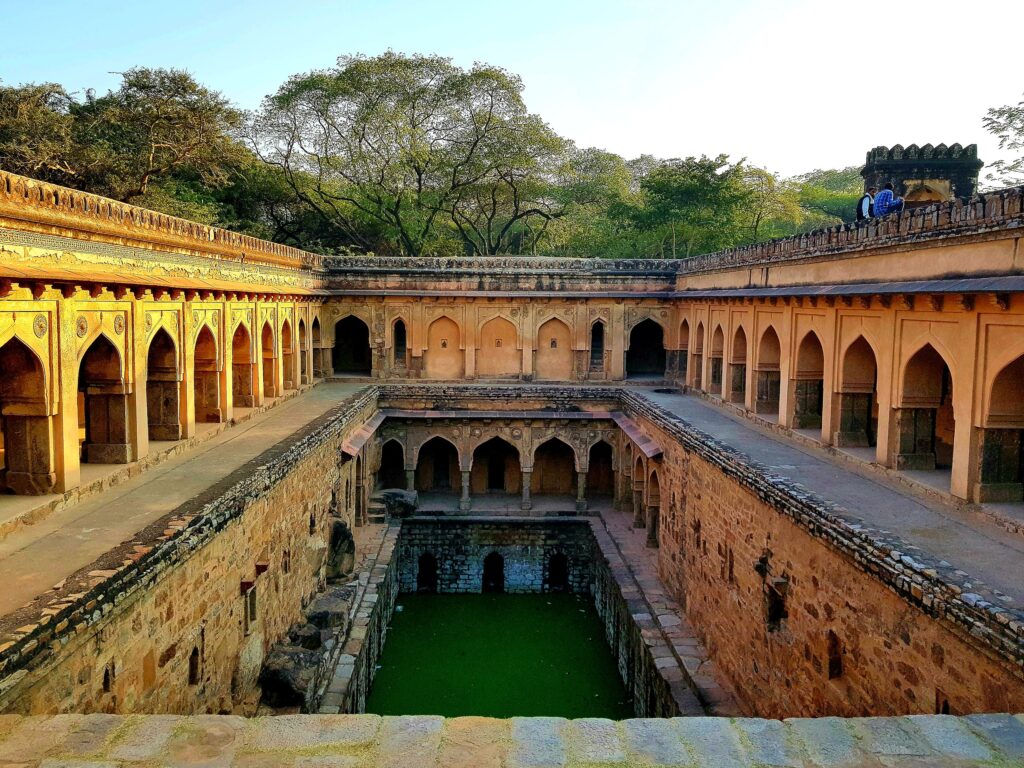
Rajon Ki Baoli

After that I reached Rajon Ki Baoli, a closeby stepwell built in 1506, standing in its original state. It felt unreal to roam around freely without strict rules. It was a perfect ending to the day.

Rajon Ki Baoli
Rajon Ki Baoli

Delhi Neighbourhoods & The Colonial Reality 

On my last day, I wanted to glimpse the neighbourhoods where people actually live. I walked through affluent areas like Vasant Vihar which had lush trees, yet even there, the atmosphere remained chaotic and dusty, weighed down by the heavy pollution. Old Delhi (many people warned me to go here) I only visited one time in the morning. I went to the Red Fort and Jama Masjid. Interesting but for me they did not stand out like the others.

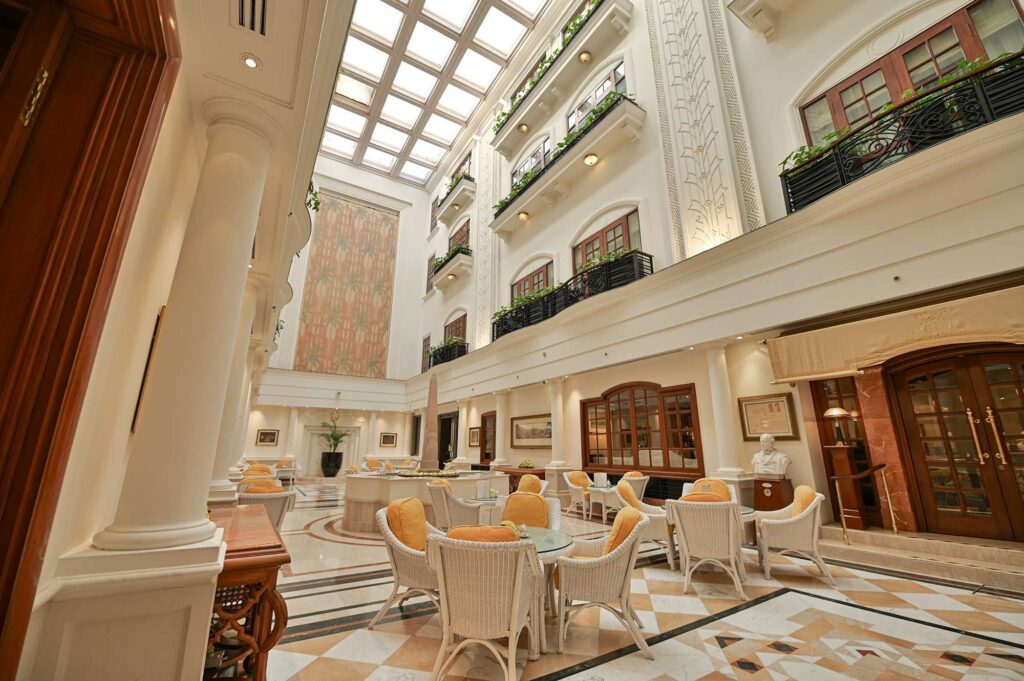
I looked for the colonial side of the city, but it was hard to enjoy. Connaught Place felt like a neglected open-air mall, and the grand Lutyens villas and parliament buildings were mostly gated and invisible. The roads were often broken or blocked. If not for those things Delhi could be prettier I thought. I ended the day escaping the reality outside with afternoon tea at The Imperial, a posh relic of the British era.

Imperial Hotel Delhi
Imperial Hotel

People & The Poverty Dilemma 

The people were friendly, and with 50% of the population being vegetarian, I connected easily with the food culture. I never felt unsafe, though being the only foreigner in a mass of people takes getting used to.

However, what stayed with me most was the intense poverty. It forces a constant dilemma upon you: whom do you give to, and how much? In the end, I decided to give to anyone who asked and anyone I passed who looked like they needed it. It felt like a drop in the ocean, but it was the only choice I could make. It was a confronting experience.

Overall, I had a good and eye-opening time in Delhi. It is chaotic, fascinating, and very human. It gave me headaches, literally and figuratively, but a visit is absolutely worth it.

My next stop is Agra & Jaipur.

My Delhi Pocket Guide & Tips

For those who want the quick “knows” before they go.

  • The Vibe: A massive contrast of ancient peace and chaotic reality. It is an assault on the senses, both good and bad.
  • The Charm Spots (My Favorites):
    • Lodhi Garden: Best for a gentle introduction to the city’s history.
    • Qutub Minar: My absolute favorite. Feels like walking into a painting.
    • Rajon Ki Baoli: A stunning stepwell in Mehrauli Archaeological Park. Quiet and atmospheric.
    • Humayun’s Tomb: Go at 7:30 AM to have it to yourself.
  • The Reality Check:
    • Walking: Not recommended for long distances. The pollution can cause headaches and nausea, and infrastructure (pavements) is often broken or non-existent.
    • Giving Money: You will be asked often. Locals may advise against it, but follow your own intuition.
  • Food Note: It is a vegetarian paradise. Roughly half the population is vegetarian, so you never have to hunt hard for food.

Shanghai City Guide: Where to Walk, Wander & Feel the City

I’m a strong believer in first-time travel writing. When everything is new, you’re more mindful. You notice details, talk to random people, feel excitement, seek adventure. It’s easier to take the reader along in a story this way. Yet many people ask me for tips on Shanghai, the city I live in. So here goes.
Duli Restaurant, Jing’an, Yanping Road

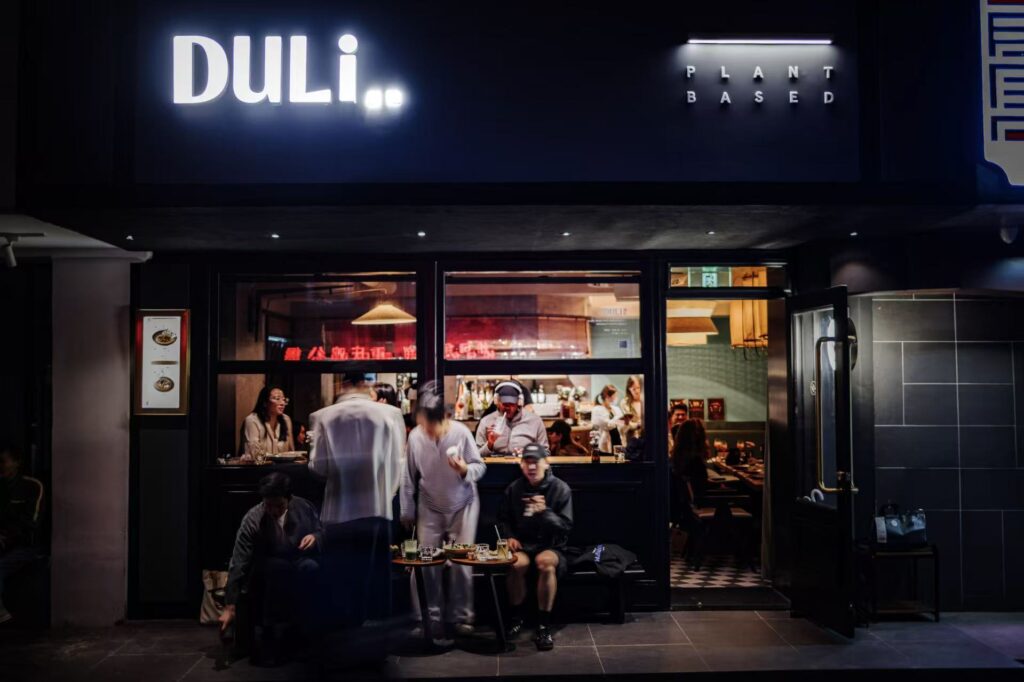
I’m inside Duli, my plant-based restaurant on Yanping Road. I’m here for new dish tasting, the fun part about owning a restaurant. Yanping Road sits in Jing’an district, the young, lively area where many expats live these days. Cafés, restaurants, coworking spaces. A good vibe.

The restaurant manager and I talk about declining restaurant traffic we’ve seen lately.
“Is it the economy?” I ask.
“Or is it because we’re not on Donghu Road anymore?”
“Probably fifty–fifty,” she says.

Interior of Duli plant-based restaurant on Yanping Road, Shanghai
Duli in Jing’an Shanghai

Donghu Road is where Duli started. It’s unique because it’s right in the city center, yet part of the old French Concession. That’s where I head next.

The French Concession: Let it be the French

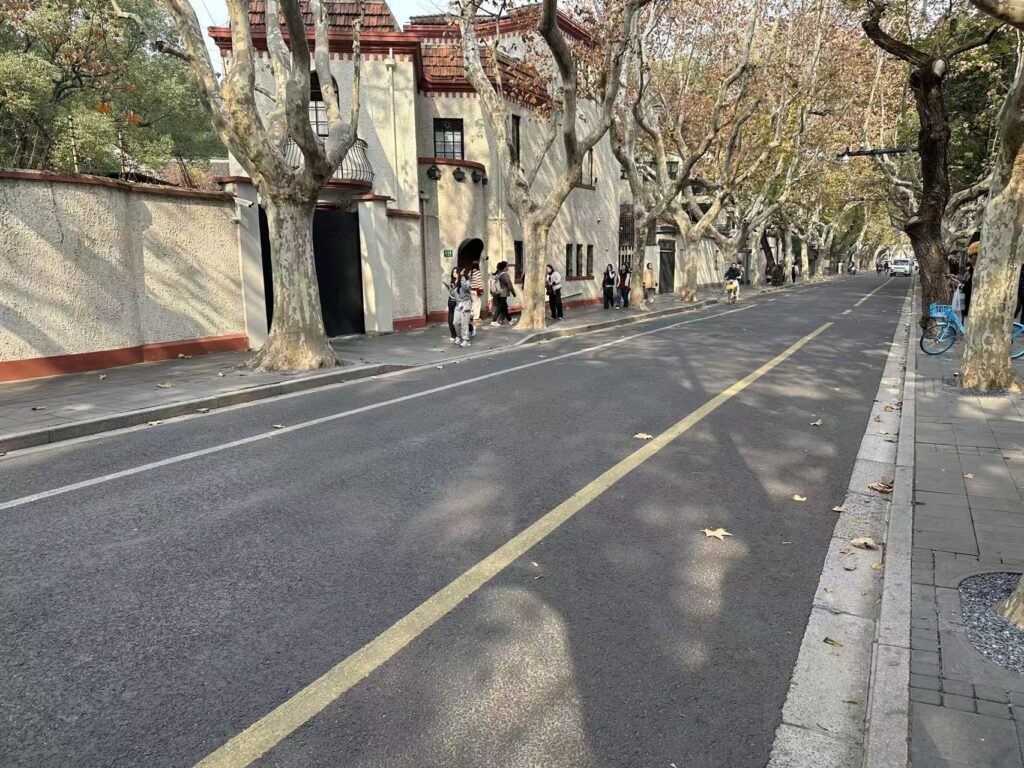
The French Concession still works on me. Colonial apartments, villas, leafy streets, a slower rhythm. It stretches far across the city, but areas like Anfu Road and Wukang Road have become the most popular parts. Wide sidewalks, old trees planted long ago by the French, cafés, bars, boutique shops, villas hidden behind gates.

Leafy streets and colonial villas in the Shanghai French Concession

Shanghai’s colonial past gives the city much of its identity. And I often think, if a city has to be colonised, let it be the French. They had taste.

I try to enter a villa compound. I manage to walk in, but almost immediately a Chinese man waves his hand. No, no, no. Most of these villas are now owned by very wealthy Chinese families. Times have changed.

Besides the French, the British were here too. And they left Shanghai what might be its most iconic place: the Bund. To go there, I take my favourite walk in Shanghai, alongside the Suzhou Creek.

Suzhou Creek & The Bund

I walk along Suzhou Creek, the river that cuts through the heart of Shanghai. It passes Jing’an, where I live, and slowly pulls me toward the Bund. This is my favourite walk in the city. It calms me down. The noise fades a little, the pace slows. I pass old buildings, quiet stretches of water, cafés and restaurants that feel slightly removed from the rush.

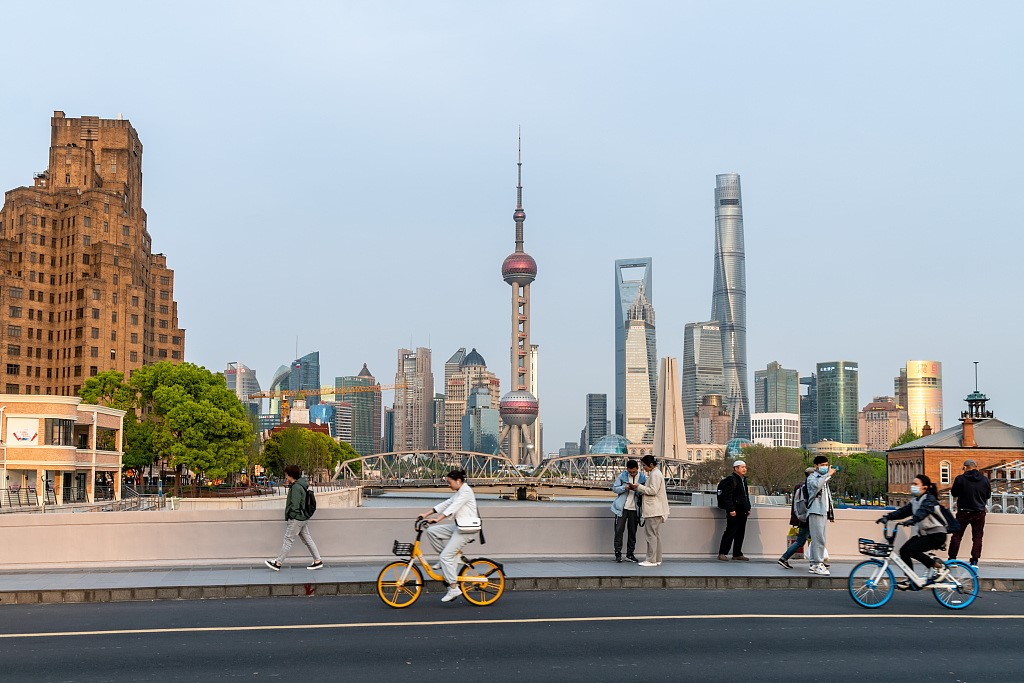
View of the Shanghai skyline from Zhapu Road Bridge
Zhapu road Bridge

I stop for a drink at the popular Fotografiska, then continue toward Zhapu Road Bridge. It’s one of my favourite spots in Shanghai. From here, the city opens up. This is where the walk turns into the Bund.

The Bund

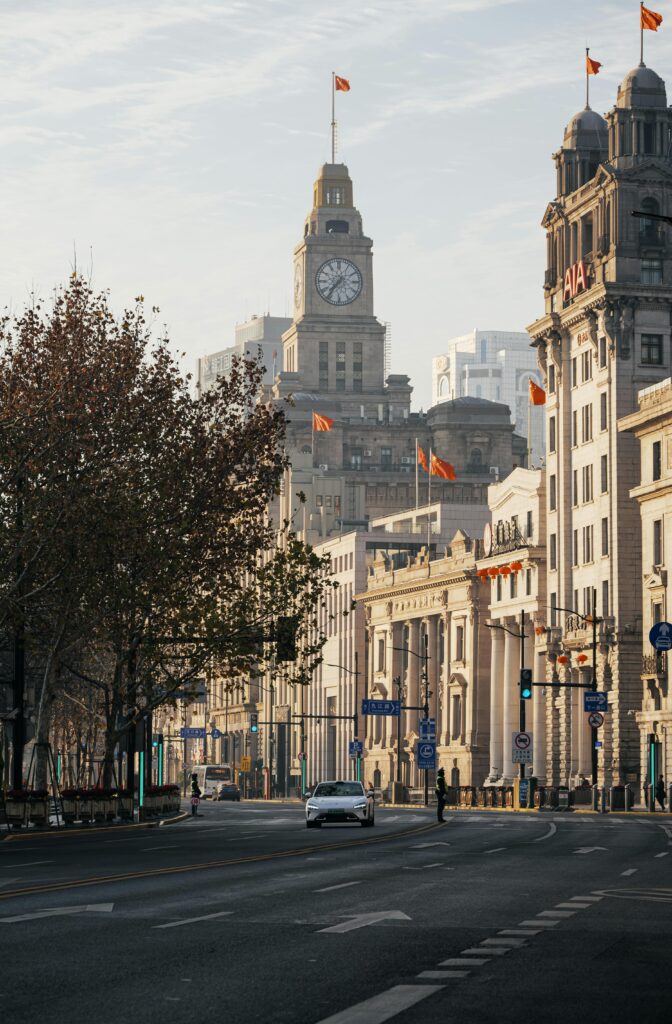
The Bund is a long row of colonial banks, consulates and hotels built by the British early 20th century. Locals, expats and tourists all gather here. On one side, historic buildings. On the other, across the Huangpu River, Shanghai’s modern skyline. That contrast is what makes it so iconic.

The Bund, Shanghai

I walk into Bund 18, where the famous Bar Rouge used to be, still my favourite spot for skyline views. It has changed owners and is now called Kev Bar. The view is still excellent. Standing here, I think back to the first time I visited, almost twenty years ago. The Bund still has that wow factor.

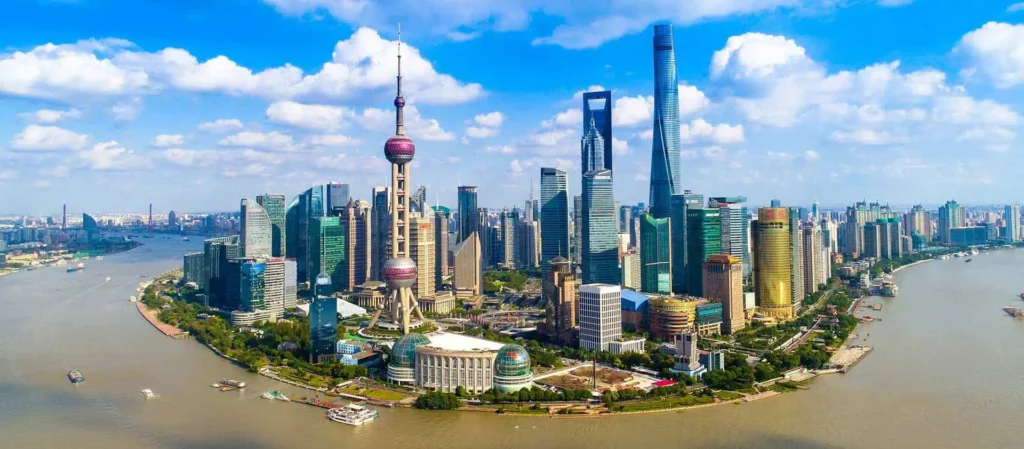
Lujiazui: Endless rows of buildings

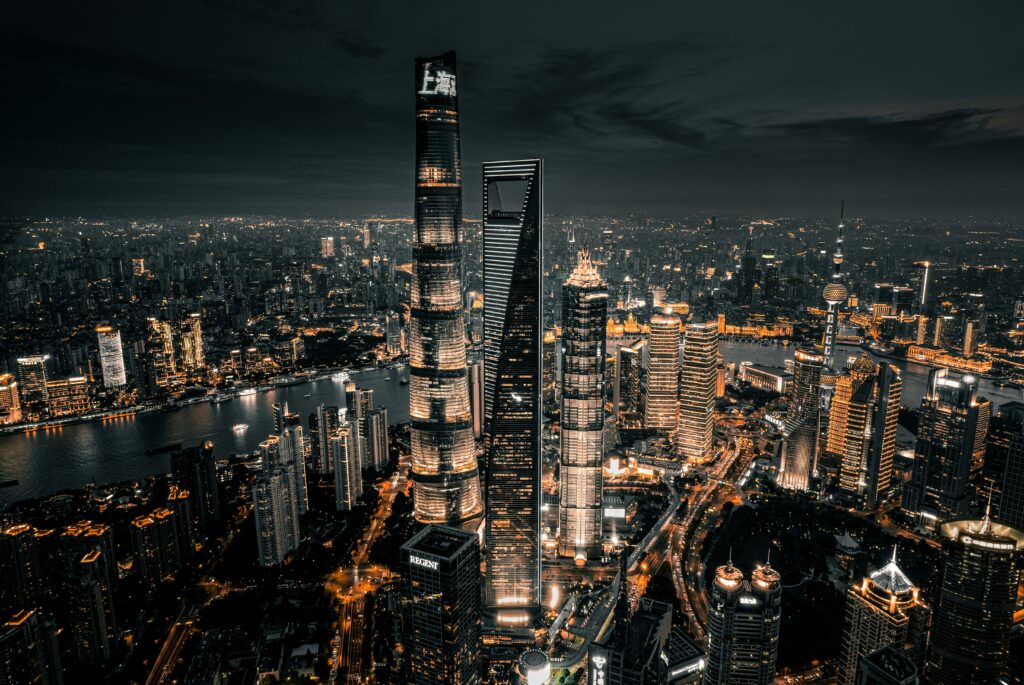
I take the boat across the river to the modern Lujiazui. I go up the 629 meter high Shanghai Tower and I start chatting with a Dutch traveller. Clearly a first-timer.

“There is no end to the rows of buildings,” he says.
“This city is so big.”

View of endless skyscrapers from the top of Shanghai Tower

I nod. By some counts, Shanghai is the biggest city in the world. If you want to understand its scale, Lujiazui is the place. Go up one of the tall towers and look out. It’s overwhelming, even after all these years.

The South Bund & Power Station of Art

On my last day, I head somewhere less familiar to me: the South Bund. This area along the Huangpu River feels more spacious, calmer, something I often miss living where I live.

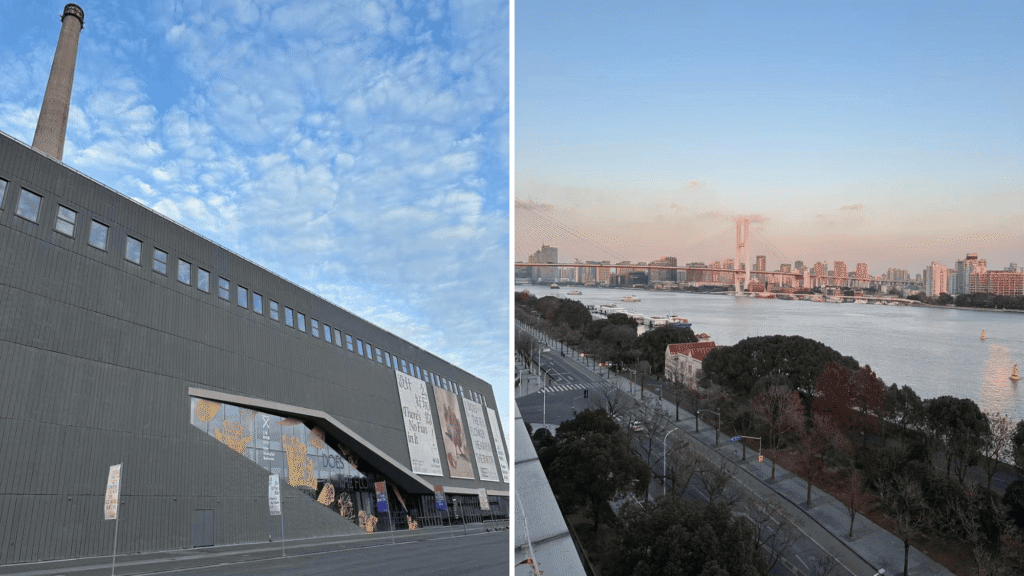
I visit the Power Station of Art, a former power plant turned museum. The exhibition itself is a bit too artsy for me, but one slogan somehow sticks in my head: “Does the flower hear the bee?”

Quiet view of cargo ships from the Power Station of Art rooftop on the South Bund
Power Station of Art & Rooftop View

I end the day on the rooftop, watching cargo ships pass quietly along the river. I post a photo on Instagram. An Austrian friend comments, “Shanghai is still the best city in Asia.”
If you’d asked me fifteen years ago, I’d agree. But I’ve been here too long now, so I don’t comment.

Reflection

Writing about Shanghai has been a challenge. I feel I’ve crossed the point where staying in one place inevitably dulls the magic. At the same time, writing this made me rediscover familiar areas and notice new ones. So it’s good to be a tourist in your own city now and then. Maybe the real passion belongs to first-time visitors now. I’m okay leaving it with them. I have other cities to visit!

Next stop: New Delhi.

My Shanghai Tips

• Stay in Xuhui, preferably in or near the former French Concession
• Wander around Yanping Road and Wuding Road in Jing’an
• Walk along Suzhou Creek to Zhapu Road Bridge, my favourite spot. Best in the late afternoon
• Spend time on the Bund and, if possible, go up to Kev Bar for the iconic bund – Lujiazui view and feeling.
• Visit the Peace Hotel for a sense of history
• Wander around Lujiazui and go up one of the 3 tall towers if you want to feel the city’s scale
• The French Concession is essential: Wukang Road, Anfu Road, Donghu Road, Maoming Road
• If you have time, see People’s Park, Xintiandi and Fuxing Park – Walk on Nanjing Road from Kerry center , via Taikoohui to People’s park
• Go to the South Bund and the Power Station of Art for peace and art, and further downriver to Gate M if you like newer creative areas

Subscribe to our Newsletter